
Tech
Tsunaihaiya: Meaning, Origins, Craftsmanship, and Why the Name Matters

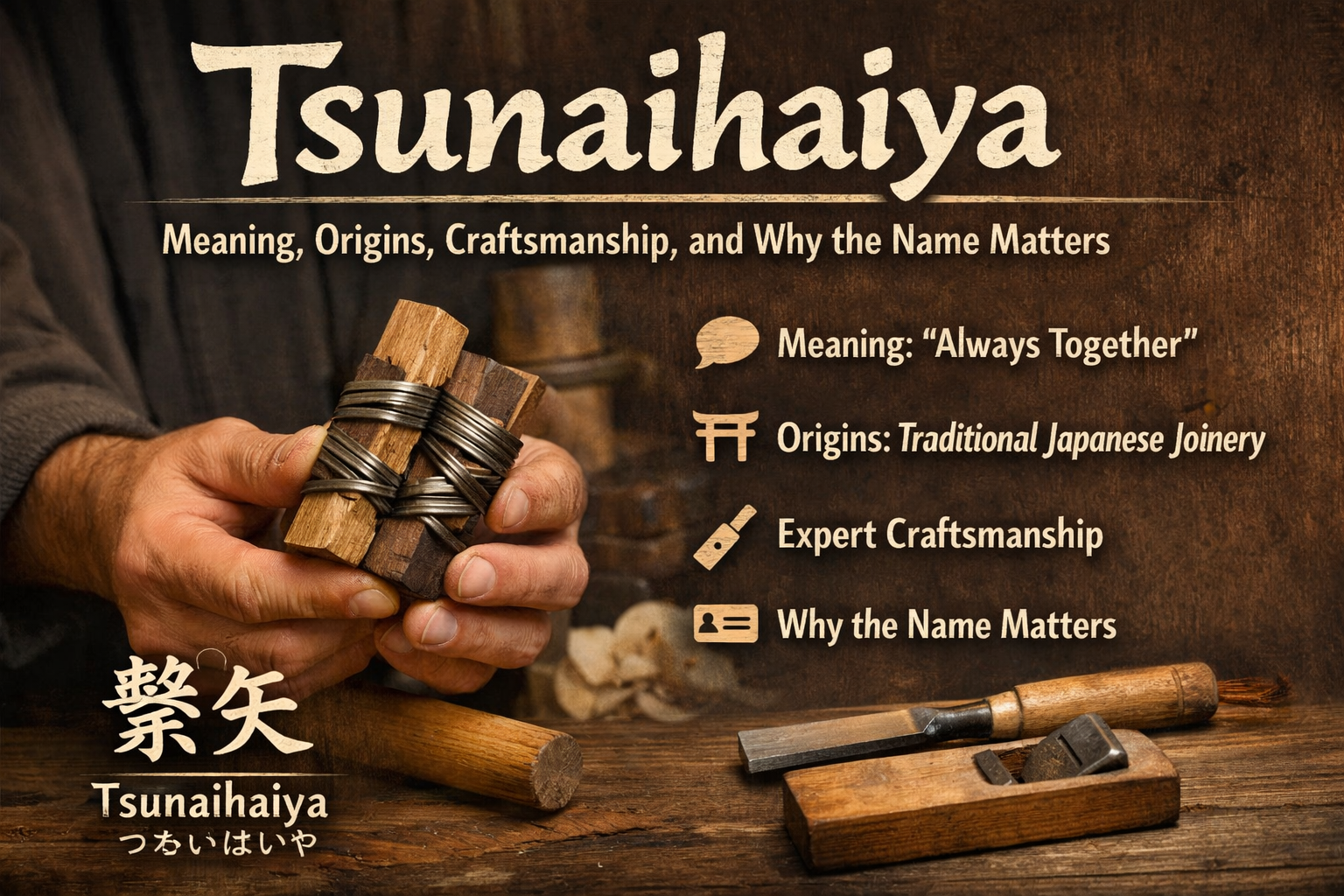
Tsunaihaiya is one of those rare names that instantly makes people curious. It sounds poetic, a little mysterious, and deeply rooted in something older than modern fashion. If you search for it online, you will notice that the word is used in different ways across recent articles. The most clearly documented use, however, points to Tsunaihaiya as a jewellery label tied to designer Yusuke Kuwano and San Carlos Apache artist Craig Dan Goseyun. Retailer profiles describe it as a brand established in 2012, blending techniques inherited from Native American jewellery traditions with traditional Japanese methods. They also explain that the name is described in Apache as meaning “the rising sun” or “Japan.”
That background already tells you why the name has gained attention. Tsunaihaiya is not simply about accessories. It sits in the space where heritage, craft, and modern design meet. The brand’s appeal comes from the fact that it does not feel mass-produced or trend-chasing. Instead, it feels considered. Every detail, from the name to the metalwork, suggests patience, symbolism, and respect for tradition. In a market crowded with generic jewellery, that difference matters.
This article focuses on Tsunaihaiya as the documented jewellery brand because that is the most reliable and verifiable meaning currently available. It is also the interpretation that gives the keyword real depth. Rather than treating it as a random internet phrase, it makes more sense to explore what the name represents, how the brand was shaped, what design values define it, and why it continues to attract people who care about substance as much as style.
Tsunaihaiya: Meaning, Origins, and the Story Behind the Name
The first thing that stands out about Tsunaihaiya is its name. Good brand names do more than sound attractive. They carry a point of view. In retailer descriptions, Tsunaihaiya is explained as an Apache word or phrase referring to “the rising sun” or “Japan.” That is a striking meaning because it connects geography, symbolism, and identity in one phrase. Sunrise is often linked with renewal, beginnings, direction, and clarity. When a brand chooses a name like that, it is making a quiet statement: this is not throwaway fashion. It is something meant to carry meaning.
The documented origin story makes the brand even more interesting. Retailer profiles state that Tsunaihaiya was founded in 2012 with San Carlos Apache artist Craig Dan Goseyun and designer Yusuke Kuwano. Those same profiles describe the jewellery as the result of inherited Native American techniques mixed with traditional Japanese techniques. That cross-cultural foundation is not a marketing gimmick. It is the core of the brand’s identity. The name, the materials, and the design language all point back to the same idea: connection through craft.
There is something refreshing about that approach. Many brands borrow visual ideas from different cultures without much care. Tsunaihaiya appears to work from a different angle. The brand story, at least in the descriptions currently indexed online, is about dialogue rather than imitation. One tradition does not swallow the other. Instead, both are meant to remain visible. You can feel that in the way the brand is presented: Japanese discipline, Native American influence, handmade character, and an interest in adornment as something more personal than decorative.
The designer profile adds another layer. A retailer page says Yusuke Kuwano moved to Santa Fe, New Mexico, in 2009, studied metalwork at the Institute of American Indian Arts, and won gold in jewellery competitions there. That matters because it shows that the work did not come from distant admiration alone. There was direct study, practical training, and immersion in a place with strong Native artistic traditions. It helps explain why the brand has more gravity than a typical “inspired by” label.
What also makes Tsunaihaiya compelling is its sense of timing. The brand was founded more than a decade ago, yet it fits very well with what many buyers want now: objects with a story, visible handwork, and a slower design process. People are tired of disposable products. They want pieces that feel lived in before they are even worn. They want texture, weight, and something that seems to hold memory. Tsunaihaiya fits that shift naturally because it was built around craftsmanship from the start, not retrofitted to match a trend later.
Why Tsunaihaiya Stands Out in Modern Jewellery
The modern jewellery market often swings between two extremes. On one side, you get luxury branding with polished language but little soul. On the other, you get affordable fast-fashion accessories that look good for a week and then disappear into a drawer. Tsunaihaiya stands in a different lane. It seems designed for people who notice the small things: a surface texture, the way metal catches light, the feel of an object shaped by hand instead of stamped out by a machine.
That handmade quality is not a minor detail. One retailer description for a ring says each piece is made by hand, so every item has slightly different expression and becomes a kind of one-off. That kind of variation is usually seen as a flaw in mass retail. Here, it becomes part of the beauty. Handmade work records the touch of the maker. It reminds you that jewellery can still be intimate, not industrial.
The product range also suggests that Tsunaihaiya is not limited to one narrow style. Current retailer listings show necklaces, bracelets, rings, anklets, keyrings, and wallets, along with bead bracelets and feather-themed pieces. That tells you the brand is building a wider design world rather than relying on one signature item. It also means buyers can enter the brand at different levels, whether they want a subtle ring, a striking bangle, or something more symbolic.
Another reason the brand feels distinctive is that it treats ornament seriously. One retailer profile includes a reflective line asking what modern Japanese adornment should be today. That question is more thoughtful than it first appears. Jewellery is often sold as a simple add-on, but adornment has always been tied to identity, memory, status, and belonging. Tsunaihaiya seems interested in recovering that deeper role. The pieces are meant to sit on the body, yes, but also to speak quietly about taste, roots, and intention.
This is where Tsunaihaiya becomes more than a keyword people search out of curiosity. It becomes a useful case study in how a brand can feel modern without cutting itself off from older ways of making. It does not shout. It does not beg for attention. It simply builds a coherent identity and lets the work do the talking. In a noisy market, that restraint can be more powerful than hype.
Tsunaihaiya Today: Design Language, Materials, and Buying Considerations
If you want to understand Tsunaihaiya properly, you have to look at the objects themselves. The current retailer descriptions show a brand that favours silver, brass, gold plating, textured finishes, beads, and motifs such as feathers. Prices on indexed listings range from accessible bead bracelets to higher-priced bangles and necklaces, which suggests a layered catalogue rather than a single luxury tier. That mix helps explain the brand’s appeal. It can attract collectors who want statement pieces and everyday wearers who want something subtle but distinctive.
The materials matter because they affect how the jewellery feels in real life. Silver has weight and memory. Brass and plated finishes can create contrast and warmth. Beads introduce colour and rhythm. Feather motifs bring movement and symbolism. None of that is accidental. In jewellery, materials are part of the language. They tell you whether a piece wants to feel ceremonial, rugged, refined, or understated. Tsunaihaiya seems most comfortable in that middle ground where elegance and earthiness meet.
Texture is another key part of the brand’s character. One product page describes a ring through the contrast of light and shadow expressed in delicate detail and surface texture. That detail says a lot about the design philosophy. These pieces are not only about form. They are about surface, reflection, and the emotional effect of finish. Smooth metal feels different from hammered metal. High polish feels different from a softened, worn look. Tsunaihaiya appears to use those contrasts deliberately, which gives the jewellery more depth than simple decorative shine.
For buyers, authenticity is naturally important. One retailer explicitly identifies itself as an authorised seller and states that the products are purchased directly from the brand. That is useful because niche jewellery labels often get copied, and details can be lost fast when imitation enters the picture. If someone is buying Tsunaihaiya for its meaning as well as its look, authenticity is part of the value. A copied object may resemble the original, but it cannot carry the same design lineage or maker intent.
There is also a practical reason the brand keeps attracting interest: the pieces appear wearable. Some artistic jewellery is admired more than worn. It looks impressive in photos but awkward in daily life. Tsunaihaiya seems to avoid that trap. Retail descriptions present the pieces as distinctive but easy to integrate into ordinary style. A bracelet can lift a simple outfit. A textured ring can add character without dominating the hand. A feather keyring or necklace can signal personality without looking forced. That balance between art and use is hard to achieve, and it may be one of the brand’s quiet strengths.
From an SEO point of view, a lot of people searching this term are probably asking one of three things: What does it mean? Is it a real brand? Why is it interesting? The answer to all three is connected. Tsunaihaiya matters because it is a name with a documented backstory, a clear design philosophy, and a product line that reflects its origins instead of abandoning them. That is why the term keeps showing up in new web content. Curiosity brings people in, but the blend of symbolism, metalwork, and cultural narrative is what keeps them reading.
Conclusion
Tsunaihaiya is more than a striking keyword. It is a name attached to a documented jewellery brand shaped by Yusuke Kuwano and Craig Dan Goseyun, founded in 2012 and presented by retailers as a meeting point between Native American and Japanese techniques. That alone gives it substance. But the deeper reason it stands out is simpler: it feels intentional. The name carries meaning. The craftsmanship feels human. The designs suggest care, memory, and identity instead of empty trend language. In a world full of forgettable products, Tsunaihaiya feels like something made to last in both material and meaning.
FAQs
1. What does Tsunaihaiya mean?
Retailer profiles currently describe Tsunaihaiya as an Apache term or phrase meaning “the rising sun” or “Japan.” In the context most clearly documented online, it is closely tied to the jewellery brand name.
2. Is Tsunaihaiya a brand or just a word?
The most verifiable use online is as a jewellery brand. While some recent websites use the term in looser or conflicting ways, retailer pages provide the clearest documented information about it as a brand identity.
3. Who founded Tsunaihaiya?
Indexed retailer descriptions say the brand was established in 2012 with San Carlos Apache artist Craig Dan Goseyun and designer Yusuke Kuwano.
4. What kind of products does Tsunaihaiya make?
Current listings show rings, necklaces, bracelets, anklets, keyrings, wallets, and bead-based accessories, with both subtle and statement-style pieces.
5. Why is Tsunaihaiya different from ordinary fashion jewellery?
Because it is presented as handmade, rooted in cultural craft traditions, and designed around material detail, symbolism, and texture rather than fast-moving trends. That gives the pieces a more personal and lasting character.
When you think about the evolution of vehicle maintenance, it is easy to get lost in the sea of ceramic coatings, synthetic lubricants, and high-tech detailing sprays. However, a new player has emerged in the enthusiast and professional spheres that is redefining how we approach car care: Autoamina. This concept represents a bridge between chemistry and passion, offering a comprehensive way to ensure your vehicle remains in showroom condition despite the rigors of daily driving.
Understanding the mechanics behind Autoamina requires looking past the surface level of simple car washing. It is about creating a symbiotic relationship between the vehicle’s surfaces and the protective agents applied to them. Whether you are a weekend warrior looking to make your paint pop or a professional detailer seeking the ultimate finish, mastering this approach is becoming essential in the modern era of automotive engineering.
What is Autoamina and Why Does It Matter?
At its core, Autoamina refers to a specialized philosophy of automotive protection that emphasizes longevity and chemical resilience. It isn’t just a single product; it is a methodology of treating a car as a living machine that requires specific “nutrients” to stay healthy. In a world where environmental contaminants like acid rain, bird droppings, and UV rays are constantly attacking your investment, having a reliable defense system is no longer optional.
The importance of Autoamina lies in its ability to provide a multi-layered shield. Most traditional waxes sit on top of the paint and melt away under high heat or harsh detergents. In contrast, the modern techniques associated with this movement involve bonding at a molecular level. This ensures that the protection doesn’t just sit there—it becomes a part of the vehicle’s “skin.”
The Science of Surface Protection
The technical foundation of Autoamina is rooted in advanced polymer science. To appreciate the results, one must understand how light interacts with a vehicle’s surface. When paint is unprotected, it develops microscopic scratches and “pores” that catch light at odd angles, making the car look dull.
-
Levelling the Surface: Specialized compounds fill these microscopic valleys to create a perfectly flat plane.
-
Hydrophobic Properties: Water tension is increased so that moisture beads up and rolls off, taking dirt with it.
-
Thermal Resistance: High-grade components ensure the protection remains stable even when the hood reaches extreme temperatures.
By integrating Autoamina principles into your routine, you are essentially creating a glass-like barrier. This barrier doesn’t just look good; it actively repels the industrial fallout that typically eats away at clear coats over time.
Key Benefits of Using Autoamina Techniques
Why are so many car enthusiasts switching to the Autoamina way of life? The benefits extend far beyond a simple shine. It is about the long-term preservation of value and the reduction of maintenance effort.
-
Extended Paint Life: By blocking UV rays, you prevent the oxidation that leads to “cloudy” or peeling clear coats.
-
Ease of Cleaning: Because the surface is so slick, dirt cannot easily bond to it, making your weekly wash twice as fast.
-
Chemical Resistance: It provides a buffer against harsh road salts and alkaline cleaners used in many automatic car washes.
-
Enhanced Resale Value: A car that looks new after five years will always command a higher price than one with faded, weathered paint.
When you invest in Autoamina, you are effectively buying time. You spend less time scrubbing and more time enjoying the drive, knowing the vehicle is shielded from the elements.
How to Implement Autoamina in Your Detailing Routine
Starting with Autoamina doesn’t require a degree in chemistry, but it does require patience and the right sequence of actions. You cannot simply slap a high-tech coating on a dirty car and expect it to work.
Step 1: Decontamination
The first phase of the Autoamina process is a deep clean. This goes beyond a standard soap and water wash. You need to use an iron remover to dissolve metallic particles embedded in the paint and a clay bar to lift off bonded contaminants. If the surface isn’t surgically clean, the protective layer won’t bond correctly.
Step 2: Surface Correction
Before applying your Autoamina products, inspect the paint for swirls. Even minor imperfections will be “locked in” by a high-quality sealant. Using a dual-action polisher with a light finishing polish can clarify the paint and bring out the depth of the color.
Step 3: The Application
Apply the Autoamina sealant or coating in small sections. The key is thin, even layers. Most people make the mistake of using too much product, which leads to streaking. Use high-quality microfiber towels to buff the residue away immediately, ensuring a streak-free, high-gloss finish.
Autoamina and the Interior Revolution
While the exterior gets all the glory, Autoamina principles are equally applicable to the interior of the vehicle. Modern interiors are a mix of leather, Alcantara, plastics, and carbon fiber. Each of these surfaces requires a specific type of protection to prevent cracking and fading.
-
Leather Conditioning: Keeping hides supple prevents the “spider-web” cracking often seen on driver’s seats.
-
UV Blocking for Plastics: Prevents the dashboard from becoming brittle and off-gassing, which creates that annoying film on the inside of your windshield.
-
Fabric Shielding: Spills happen, but with the right Autoamina fabric guard, liquids sit on top of the fibers rather than soaking in.
A holistic approach ensures that the “soul” of the car—the place where you actually spend your time—is just as preserved as the shiny exterior.
The Role of Sustainability in Autoamina
In the past, car detailing was a chemically heavy industry. However, the modern Autoamina movement is shifting toward eco-friendly formulations. Many of the latest silica-based and ceramic-infused products are designed to be biodegradable and low in VOCs (Volatile Organic Compounds).
This shift isn’t just about being “green.” It’s about efficiency. Because Autoamina products last longer than traditional waxes, you use less product over the life of the vehicle. Additionally, the hydrophobic nature of these treatments means you use significantly less water during the cleaning process, contributing to a more sustainable hobby.
Comparing Autoamina to Traditional Waxing
For decades, Carnauba wax was the gold standard. It provided a warm, deep glow that was unmatched. However, in the context of Autoamina, traditional wax is often viewed as a temporary aesthetic fix rather than a long-term solution.
| Feature | Traditional Wax | Autoamina Approach |
| Durability | 4 to 6 Weeks | 6 to 12 Months (or more) |
| Heat Resistance | Low (melts at high temps) | Very High |
| Ease of Use | High | Moderate (requires prep) |
| Gloss Type | Warm/Oily | Sharp/Reflective |
| Protection | Basic barrier | Chemical/Molecular bond |
While there is still a place for wax in the vintage car world, Autoamina is the clear winner for anyone driving a modern vehicle in a harsh environment.
Common Myths About Autoamina
As with any popular trend, several misconceptions have cropped up around Autoamina. Let’s clear the air on a few of them.
Myth 1: It makes the car scratch-proof.
While Autoamina provides a harder surface than bare paint, it is not armor. Rocks and aggressive brushes can still cause damage. Think of it as a “sacrificial layer” that takes the hit so your paint doesn’t have to.
Myth 2: You never have to wash your car again.
This is a dangerous misunderstanding. While an Autoamina treated car stays cleaner for longer, road film and dust will still accumulate. The difference is that the wash process becomes incredibly easy.
Myth 3: It’s only for expensive sports cars.
Every car deserves protection. Whether you drive a luxury SUV or a compact commuter, Autoamina helps maintain the structural integrity of the exterior surfaces, saving you money on repairs and detailing in the long run.
The Professional vs. DIY Approach to Autoamina
Should you do it yourself or hire a pro? This is a common question in the Autoamina community. If you enjoy the process of detailing and have a clean garage, the DIY route is incredibly rewarding. There are many consumer-grade products designed specifically for this.
However, if you are looking for multi-year coatings that require infrared curing or heavy paint correction, a professional Autoamina installer is the way to go. They have the lighting, tools, and climate-controlled environments necessary to achieve a flawless finish that can last the lifetime of your ownership.
Future Trends in Autoamina Technology
The world of Autoamina is not static. We are already seeing the introduction of graphene-infused coatings, which offer even better heat dissipation and anti-static properties. Imagine a car that literally repels dust while sitting in a garage—that is where we are headed.
Self-healing technology is another exciting frontier. Some high-end Autoamina films and coatings can actually “repair” swirl marks when exposed to heat or sunlight. This takes the “sacrificial layer” concept to a whole new level, ensuring that the car stays perfect even if it suffers minor abrasions.
Maintaining Your Autoamina Coating
Once you have successfully applied an Autoamina treatment, the goal is to maintain it. Avoid “strip soaps” or cheap dish detergents, as these are designed to remove grease and will slowly degrade your protective layer. Instead, use a pH-neutral “maintenance shampoo” specifically designed for coated cars.
To boost the performance, many users apply a “topper” or “reload” spray every few months. This adds a fresh layer of slickness and refreshes the hydrophobic properties of the base Autoamina layer. It is a simple five-minute task that can extend the life of your coating by several months.
Conclusion: Why You Should Start Your Autoamina Journey Today
In the grand scheme of vehicle ownership, the exterior appearance is often the first thing people notice and the last thing owners properly protect. By embracing the Autoamina philosophy, you are doing more than just washing a car; you are preserving a piece of engineering. You are ensuring that the vibrant red or the deep metallic black of your paint stays as vivid as the day it rolled off the assembly line.
Whether you are looking for that “wet look” shine or simply want a car that is easier to keep clean during a messy winter, Autoamina provides the tools and techniques to achieve your goals. It is a fusion of science, art, and automotive passion that pays dividends every time you see your reflection in the hood.
FAQs About Autoamina
1. Is Autoamina safe for all types of paint finishes, including matte?
Yes, but you must choose the specific product carefully. While the Autoamina methodology applies to all vehicles, matte finishes require specialized “matte-safe” sealants that provide protection without adding an unwanted glossy shine. Always check the label before application.
2. How often should I reapply Autoamina products?
This depends on the specific product used. A high-quality Autoamina sealant typically lasts 6 months, while a ceramic-based coating can last 2 to 5 years. For daily drivers exposed to harsh weather, a bi-annual refresh is usually recommended to maintain peak performance.
3. Can I apply Autoamina over an existing wax?
It is not recommended. For Autoamina to bond properly to the surface, it needs to be applied to bare paint. If you apply it over wax, the coating will only last as long as the wax beneath it. Use a wax-stripping shampoo or a light polish to prep the surface first.
4. Does Autoamina protect against rock chips?
While it adds a microscopic layer of hardness, Autoamina coatings are generally too thin to stop high-speed rock impacts. For true rock chip protection, you should look into Paint Protection Film (PPF) and then apply an Autoamina coating on top of the film for the best of both worlds.
5. What is the best way to dry a car treated with Autoamina?
Since the surface is highly hydrophobic, many enthusiasts use a leaf blower or a dedicated car dryer to “blow” the water off. This is the safest method because it avoids physical contact with the paint. Alternatively, use a high-quality, plush microfiber drying towel and gently pat the surface dry.

In the rapidly evolving landscape of digital tools and specialized identifiers, the concept of Mylt34 has emerged as a significant touchstone for professionals seeking streamlined operations. Whether you are navigating complex data systems or looking for a way to categorize specialized digital assets, understanding the nuances of Mylt34 is essential. It represents a bridge between technical precision and user-centric design, ensuring that even the most intricate tasks become manageable for the everyday user.
As we delve deeper into the utilities and applications of Mylt34, it becomes clear that this is not just another technical term. It is a framework that supports better organization, enhanced security protocols, and a more intuitive approach to digital problem-solving. This article will break down everything you need to know to leverage Mylt34 effectively in your personal or professional life.
The Core Fundamentals of Mylt34
To grasp the full potential of Mylt34, one must first look at its underlying structure. At its heart, Mylt34 serves as a specialized protocol designed to handle high-frequency data exchanges with minimal latency. This makes it incredibly valuable in environments where speed and accuracy are non-negotiable.
Many users encounter Mylt34 within the context of automated systems. It acts as a primary key or a specific configuration setting that allows disparate software modules to communicate without friction. By standardizing the way information is processed through the Mylt34 lens, developers and end-users alike can avoid the common pitfalls of data silos and incompatible file formats.
Beyond the technical jargon, Mylt34 is about reliability. In an era where digital downtime can cost thousands of dollars per minute, having a robust system like Mylt34 in place ensures that your workflow remains uninterrupted. It provides a safety net for your data, allowing for seamless transitions between different stages of a project.
Why Mylt34 Is Revolutionizing Professional Workflows
The adoption of Mylt34 across various industries is not a coincidence. It addresses specific pain points that have plagued digital management for years. From marketing agencies to financial institutions, the versatility of Mylt34 is proving to be a game-changer.
Enhanced Data Accuracy
One of the primary reasons professionals are flocking to Mylt34 is its ability to reduce human error. Manual data entry is notorious for inconsistencies, but the Mylt34 protocol automates much of this process. By utilizing Mylt34, organizations can ensure that their records are precise and up-to-date across all platforms.
Scalability and Growth
As businesses grow, their technical needs become more complex. Mylt34 is built with scalability in mind. It doesn’t matter if you are managing a small database or a massive enterprise network; the architecture of Mylt34 adapts to your needs. This flexibility allows companies to scale their operations without having to overhaul their entire infrastructure.
Implementation Strategies for Mylt34
Integrating Mylt34 into your existing setup requires a thoughtful approach. While the tool itself is powerful, its effectiveness depends largely on how it is deployed. Here are some key strategies for a successful Mylt34 implementation.
-
Audit Your Current Systems: Before introducing Mylt34, identify where your current bottlenecks exist. Knowing exactly where you need more efficiency will help you configure Mylt34 for maximum impact.
-
Prioritize Security Protocols: Since Mylt34 often handles sensitive information, ensure that your encryption layers are active. A secure Mylt34 environment is a productive one.
-
Train Your Team: Even the best tools are useless if the team doesn’t know how to use them. Conduct brief workshops on the specific benefits of Mylt34 within your organization.
-
Monitor and Adjust: The digital landscape changes quickly. Regularly review your Mylt34 performance metrics to ensure the system is still meeting your goals.
By following these steps, you can turn Mylt34 from a mere concept into a cornerstone of your daily operations. The goal is to make the technology work for you, rather than the other way around.
Technical Specifications and the Logic of Mylt34
For the more technically inclined, the logic behind Mylt34 is fascinating. It operates on a decentralized logic gate system, which means that even if one part of the network fails, the Mylt34 identifier remains accessible and functional. This redundancy is a hallmark of high-tier digital assets.
The syntax used within Mylt34 is designed to be lightweight. This ensures that it doesn’t bog down your system resources. When you execute a command through Myl34, the response time is often measured in milliseconds, providing a “snappy” feel to any interface that utilizes it.
Furthermore, Mylt34 supports cross-platform compatibility. Whether you are running on Windows, macOS, or a Linux-based server, Mylt4 maintains its integrity. This universal nature is what makes it a preferred choice for global teams who may be using a variety of hardware and software combinations.
Improving User Experience with Mylt34
At the end of the day, technology should make the user’s life easier. Mylt4 excels in this department by simplifying complex interactions. When a user interacts with a system powered by Mylt4, they often don’t even realize the complex processes happening in the background.
Intuitive Interfaces Systems that integrate Mylt3 typically feature cleaner UIs. Because Mylt34 handles the “heavy lifting” of data organization, developers can focus on creating a visual experience that is easy to navigate. This leads to higher user satisfaction and lower abandonment rates for digital products.
Reduced Latency Nothing kills a user’s experience faster than a spinning loading wheel. By optimizing data paths, Mylt34 significantly reduces wait times. This speed is especially crucial for mobile users who expect instant results while on the go. When your backend is Mylt34-optimized, your users stay engaged longer.
Common Myths and Misconceptions About Mylt34
As with any trending technical term, a few myths have cropped up around Mylt34. It is important to separate fact from fiction to make informed decisions about your digital strategy.
Myth 1: Mylt34 is only for large corporations. This couldn’t be further from the truth. While large firms certainly benefit from it, the efficiency gains of Mylt4 are equally valuable for freelancers and small business owners. Anyone looking to save time can find a use for Myt34.
Myth 2: Implementing Myl34 is too expensive. While there can be an initial setup cost depending on your specific needs, the long-term ROI of Mylt4 usually far outweighs the investment. The time saved and errors avoided often pay for the system within the first few months.
Myth 3: Mylt34 will replace human workers. Myl34 is a tool for augmentation, not replacement. It handles the repetitive, mundane tasks, freeing up human workers to focus on creative and strategic endeavors. Think of Mylt34 as a highly efficient assistant that never sleeps.
The Future of Myl34 in the AI Era
Looking ahead, the integration of Mylt34 with artificial intelligence and machine learning is inevitable. We are already seeing early stages of “Smart Mylt34” systems that can predict user needs before they are explicitly stated. This proactive approach will redefine what it means to be productive.
Imagine a world where your Mylt34 configuration automatically adjusts based on your current workload. If you are in a high-intensity phase, the system allocates more resources to ensure zero lag. During quieter periods, it switches to a power-saving mode. This level of intelligent automation is the next frontier for Myt34.
Moreover, as blockchain technology matures, we may see Myt34 used as a secure identifier for decentralized finance and smart contracts. The inherent stability of the Mlt34 protocol makes it an ideal candidate for verifying transactions in a trustless environment.
Best Practices for Maintaining Your Myl34 System
To ensure that your Mylt34 setup remains at peak performance, regular maintenance is required. Treat it like a high-performance engine; it needs the right fuel and occasional tuning.
-
Regular Updates: Software developers frequently release patches for Mylt34-related tools. Always keep your version current to protect against vulnerabilities and access new features.
-
Data Cleaning: Over time, “ghost data” can clutter your Mylt34 environment. Perform a monthly sweep to remove obsolete entries and keep the system lean.
-
Backup Everything: Even with the redundancy of Myt34, having an external backup is a best practice. Never rely solely on one system for your most critical assets.
-
Community Engagement: Join forums or groups dedicated to Mylt34. The collective knowledge of other users is an invaluable resource for troubleshooting and discovering new shortcuts.
Staying proactive with these maintenance tasks will ensure that Myl34 continues to serve as a powerful asset for years to come. It’s about building a sustainable digital ecosystem.
Conclusion: Embracing the Potential of Mylt34
In conclusion, Mylt34 is much more than a technical identifier; it is a catalyst for digital transformation. By understanding its core principles, implementing it strategically, and maintaining it with care, you can unlock levels of efficiency that were previously out of reach. The transition to a Mylt4-centered workflow represents a commitment to quality, speed, and reliability in an increasingly complex world.
Don’t wait for the competition to pass you by. Start exploring how Mylt34 can be integrated into your current projects today. Whether you are an individual developer or a team leader, the benefits of this versatile protocol are clear. Embrace Mylt34 and take the first step toward a more streamlined and successful digital future.
Frequently Asked Questions (FAQs)
1. What exactly is Mylt34 used for in daily tasks?
In everyday scenarios, Mylt34 is often used as a unique identifier or a configuration tag within software applications. It helps the system recognize specific user preferences or data sets, ensuring that your experience is personalized and efficient every time you log in.
2. Is Mylt34 difficult to learn for non-technical users?
While the backend of Mylt34 is quite complex, the user-facing side is designed to be very intuitive. Most people use Mylt34-enabled systems without needing any special training, as the technology works seamlessly behind the scenes to simplify their tasks.
3. How does Mylt34 improve digital security?
Mylt34 enhances security by acting as a controlled gateway for data. It uses specific validation rules to ensure that only authorized information passes through, which significantly reduces the risk of data breaches or unauthorized access to sensitive files.
4. Can I use Mylt34 across different devices?
Yes, one of the strongest features of Mylt34 is its cross-platform compatibility. You can sync your Mylt34 settings across your smartphone, tablet, and desktop, allowing you to maintain a consistent and productive workflow no matter where you are.
5. Where can I find more resources on optimizing Mylt34?
The best place to find in-depth information is through official documentation and developer communities. Many online platforms offer specialized tutorials on how to customize your Mylt34 settings to fit your specific industry or personal needs.

In the rapidly shifting world of modern technology, businesses and developers are constantly searching for tools that bridge the gap between complex infrastructure and user-centric applications. One such term that has gained significant traction in 2026 is Binuscx. This innovative framework represents a massive leap forward in how we perceive digital scalability and cross-platform integration. By focusing on a “modular-first” architecture, Binuscx allows organizations to deploy robust digital solutions with unprecedented speed and precision. Whether you are a CTO looking to modernize your tech stack or a developer aiming for more efficient workflows, understanding the core mechanics of Binuscx is no longer optional—it is a competitive necessity.
The Evolution and Rise of the Binuscx Ecosystem
To understand why Binuscx is making waves, we must look at the historical context of enterprise software. For years, companies were forced to choose between monolithic systems that were stable but rigid, or microservices that were flexible but incredibly difficult to manage. Binuscx emerged as a “hybrid-modular” solution, offering the best of both worlds.
The development of the Binuscx philosophy was driven by the need for a more intuitive way to handle data synchronization across global networks. As edge computing and 5G became the standard, traditional data pipelines began to show their age. Binuscx was designed from the ground up to utilize these high-speed networks, ensuring that information flows smoothly regardless of the physical distance between servers.
Core Technical Features of Binuscx
What specifically makes Binuscx stand out in a crowded marketplace of digital frameworks? The answer lies in its technical DNA, which prioritizes lightweight execution and high-level security.
1. Adaptive Modular Architecture
At the heart of Binuscx is its ability to “adapt” its resource consumption based on the current load. Unlike traditional frameworks that keep processes running in the background indefinitely, the modular components of Binuscx only activate when triggered by a specific user action. This leads to significantly lower server costs and a much smaller carbon footprint for large-scale data centers.
2. Universal API Compatibility
Integration is often the biggest bottleneck in digital transformation. Binuscx addresses this by featuring a universal API layer. This allows it to communicate natively with legacy systems, modern cloud providers, and even emerging blockchain protocols. By using Binuscx, a company can connect their 20-year-old database to a cutting-edge AI model without writing thousands of lines of “glue” code.
3. Integrated Security Protocols
In 2026, cybersecurity is the top priority for every digital enterprise. Binuscx incorporates a “Zero-Trust” security model directly into its core. Every data packet moving through a Binuscx environment is encrypted and verified at multiple checkpoints, making it one of the most secure environments for handling sensitive financial or personal information.
Implementing Binuscx in Professional Workflows
The true value of Binuscx is realized when it is applied to solve real-world business problems. From e-commerce to healthcare, its applications are vast and varied.
E-commerce and Retail Optimization
For online retailers, downtime during a holiday sale can result in millions of dollars in lost revenue. By migrating to a Binuscx infrastructure, these companies can handle massive traffic spikes automatically. The system detects the surge in users and spins up additional “logic modules” to process transactions, scaling back down the moment the rush ends.
Healthcare Data Management
In the medical field, data privacy and speed are life-and-death matters. Binuscx enables hospitals to share patient records securely between different departments and even different facilities. Because Binuscx supports real-time data streaming, doctors can receive lab results or imaging data the second it is processed, leading to faster diagnoses and better patient outcomes.
Financial Services and Fintech
Fintech startups are using Binuscx to build more responsive mobile banking apps. The framework’s ability to handle high-concurrency transactions without lag makes it ideal for the world of high-frequency trading and cryptocurrency exchanges. With Binuscx, the user experience remains smooth even during periods of intense market volatility.
The Developer Experience with Binuscx
A framework is only as good as the developers who use it. One of the reasons for the widespread adoption of Binuscx is its focus on “Developer Happiness.”
-
Low-Code Options: While it is powerful enough for elite engineers, Binuscx offers low-code interfaces that allow junior developers to build functional prototypes quickly.
-
Extensive Documentation: The Binuscx community has produced a massive library of tutorials, boilerplate templates, and troubleshooting guides.
-
Hot-Reloading Capabilities: Developers can see changes to their code in real-time without restarting the entire server, which drastically speeds up the debugging process.
Sustainability and the Green Tech Movement
As we move further into the decade, the environmental impact of technology is under intense scrutiny. Binuscx is often cited as a leader in “Green Tech” because of its efficiency. Traditional digital systems often waste up to 40% of their energy on idle processes. Because of its modular nature, a Binuscx system only uses energy when it is actively performing a task. This efficiency makes it the preferred choice for companies aiming to hit their Net-Zero carbon targets by 2030.
Future Trends: Where is Binuscx Heading?
The roadmap for Binuscx suggests even deeper integration with Artificial Intelligence. We are already seeing “Self-Healing” Binuscx modules that can identify a bug in their own code and apply a temporary patch until a human developer can review it.
Furthermore, the “Binuscx-at-the-Edge” initiative aims to bring the framework’s power to IoT devices. Imagine a smart city where traffic lights, energy grids, and public transport are all coordinated by a decentralized Binuscx network, optimizing urban life in real-time. This isn’t science fiction; it is the trajectory of the technology we are seeing today.
Challenges to Consider
No technology is a magic bullet, and Binuscx is no exception. While it offers incredible benefits, there is a learning curve associated with its modular logic. Companies accustomed to “all-in-one” software packages may find the transition to a fragmented, modular system daunting at first. Proper training and a clear migration strategy are essential for a successful Binuscx implementation.
Conclusion: Why Binuscx is the Definitive Choice for 2026
The digital world is becoming more complex, not less. To survive in this environment, businesses need tools that are as flexible as they are powerful. Binuscx provides that foundation. By prioritizing modularity, security, and cross-platform compatibility, it has moved beyond being just a “tech tool” to becoming a fundamental building block of the modern economy.
Whether you are looking to save on server costs, improve your team’s development speed, or ensure your data is protected by the latest encryption, Binuscx offers a path forward. As we continue to innovate and push the boundaries of what is possible online, the principles behind Binuscx will undoubtedly guide the next generation of digital excellence. Investing time in this ecosystem now is an investment in a faster, more secure, and more sustainable future.
Frequently Asked Questions (FAQs)
1. Is Binuscx difficult to integrate with existing software? Not at all. One of the core strengths of Binuscx is its universal API compatibility. It was specifically designed to sit on top of legacy systems, acting as a modern bridge that allows older databases to communicate with new cloud-based applications seamlessly.
2. How does Binuscx help in reducing operational costs? Traditional servers often run at high capacity even when demand is low. Binuscx uses an adaptive resource model, meaning it only consumes CPU and memory power when specific modules are active. This “pay-as-you-use” logic can reduce cloud hosting bills by up to 30%.
3. Is Binuscx suitable for small startups, or is it only for large enterprises? While large enterprises benefit from its scalability, Binuscx is actually ideal for startups. Its modular nature allows small teams to start with just the features they need and “plug in” new capabilities as their business grows, preventing the need for a total system overhaul later on.
4. What kind of security does Binuscx offer for sensitive data? Binuscx employs a Zero-Trust architecture. This means that no user or device is trusted by default, even if they are inside the network perimeter. With end-to-end encryption and automated threat detection, it is built to handle highly sensitive data in the finance and healthcare sectors.
5. Can I use Binuscx for mobile app development? Yes. Binuscx features dedicated mobile SDKs (Software Development Kits) that allow developers to use the same modular logic for iOS and Android apps. This ensures that the data and user experience are consistent across both web and mobile platforms.


Tsunaihaiya: Meaning, Origins, Craftsmanship, and Why the Name Matters

Felixing: The Complete Guide to Understanding, Benefits, and Real-World Applications

123safe67: The Complete Guide to Understanding Its Purpose, Benefits, and Practical Uses

Tatasecorg: Everything You Need to Know About This Digital Platform

Valplekar – A Complete and Updated Guide to Its Meaning, Uses, and Growing Importance

Understanding Internetchocks: What They Are and Why They Matter
-
 Blogs2 months ago
Tatasecorg: Everything You Need to Know About This Digital Platform
-
 Blogs2 months ago
Valplekar – A Complete and Updated Guide to Its Meaning, Uses, and Growing Importance
-
 Blogs2 months ago
Understanding Internetchocks: What They Are and Why They Matter
-

 Blogs2 months ago
Unveiling Acamento: The Art and Science Behind Its Craft
-

 Blogs2 months ago
The Ultimate Guide to Claalekfo: Revolutionizing Modern Efficiency
-

 Blogs2 months ago
Exploring Awius: Innovative Solutions for Modern Challenges
-

 Business2 months ago
Sofoximmo: A Complete Guide to Understanding This Modern Real Estate Platform
-

 Blogs2 months ago
Exploring Epcylon: The Future of Digital Innovation