
Health
Qian Cai UF: Education, Photonics Research, and Academic Work


Qian Cai UF commonly refers to Qian Cai, an Electrical and Computer Engineering researcher at the University of Florida.
His academic work connects integrated photonics, computer engineering, artificial intelligence hardware, and optical computing.
This profile explains his educational background, research interests, published work, and contribution to emerging light-based computing technologies.
Quick Bio
| Feature | Details |
|---|---|
| Full Name | Qian Cai |
| Current Institution | University of Florida |
| Department | Electrical and Computer Engineering |
| Academic Status | Ph.D. candidate |
| Undergraduate Education | B.S. from Pennsylvania State University |
| Graduate Education | M.S. from The George Washington University |
| Main Research Area | Integrated photonics and optical computing |
| Technical Interests | Computer architecture, FPGA programming, neural networks, secure computing, quantum technology and high-performance computing |
| Current Research Direction | Reconfigurable photonic logic for energy-efficient AI acceleration |
| Research Group | Snowmass Laboratory |
| Professional Memberships | IEEE and Optica |
| Location | Gainesville, Florida, United States |
Who Is Qian Cai UF?
People searching for Qian Cai UF are generally looking for information about a doctoral researcher associated with the University of Florida’s Department of Electrical and Computer Engineering. His work is positioned at the intersection of conventional computer engineering and integrated photonics, an area that explores how light can be used to process, transmit, and manipulate information.
According to the official Snowmass Laboratory profile, Qian Cai earned his bachelor’s degree from Pennsylvania State University in 2021 and completed a master’s degree at The George Washington University in 2023. His academic training includes computer architecture, field-programmable gate arrays, high-performance computing, neural-network training, secure computing, and quantum technology.
He later joined the University of Florida as an Electrical and Computer Engineering doctoral student. In December 2025, the Snowmass Laboratory announced that he had passed his proposal examination and become an official Ph.D. candidate.
Educational Background of Qian Cai
Qian Cai’s educational path reflects a gradual transition from broad computer engineering toward specialized optical hardware research. His undergraduate studies at Penn State provided a foundation in computing systems, digital hardware, and engineering analysis.
He then attended The George Washington University, where he completed a master’s degree in computer engineering. This stage of his education strengthened his knowledge of architecture-level computing, programmable hardware, neural-network workloads, secure systems, and emerging technologies.
These subjects are closely connected. Computer architecture explains how processors organize and execute tasks, while FPGA programming allows engineers to create configurable hardware for specific applications. High-performance computing examines how large workloads can be processed efficiently, and neural-network training places substantial demands on memory, energy, and processing systems.
This combined background helps explain his later interest in photonic chips. Instead of approaching optical computing exclusively from a physics perspective, he brings experience in computational requirements, hardware acceleration, and system design.
Qian Cai’s Role at the University of Florida
At the University of Florida, Qian Cai works within the Electrical and Computer Engineering research community. He is associated with the Snowmass Laboratory, which studies integrated photonics, nonlinear optical systems, advanced materials, quantum technologies, and photonic hardware for computing.
The laboratory combines computational theory with laser systems, nanofabrication, material engineering, and experimental testing. Its projects examine how small optical devices can perform tasks traditionally completed by electronic circuits.
Within this environment, Qian Cai investigates the physics and design of photonic chips for optical computing. His work is not limited to theoretical simulations. The wider research program involves device concepts, fabrication-compatible designs, optical measurements, and system-level applications.
This interdisciplinary setting allows computer engineers, physicists, material researchers, and photonics specialists to work on connected problems. Such collaboration is important because a practical optical processor requires suitable materials, reliable fabrication, efficient device structures, control electronics, and usable computing architectures.
Main Research Interests of Qian Cai UF
The research associated with Qian Cai UF covers several connected technical fields.
Integrated Photonics
Integrated photonics involves placing optical components on compact chips. These components may guide, filter, switch, generate, or detect light. The basic goal resembles electronic integration, but photons rather than electrical currents perform some of the central operations.
Photonic integration can reduce the size of optical systems and make them more suitable for communication, sensing, computation, and quantum applications. It also creates opportunities to combine optical and electronic components within the same hardware platform.
Optical Computing
Optical computing uses light to perform selected computational operations. Photons can move rapidly through optical structures and may process multiple signals in parallel through wavelength, phase, polarization, or spatial modes.
The technology is not necessarily intended to replace every electronic processor. A more realistic approach is to assign certain demanding tasks to optical hardware while conventional electronics manage control, memory, programming, and general-purpose operations.
Artificial Intelligence Acceleration
Modern artificial intelligence systems require large numbers of matrix operations and data transfers. These activities consume considerable energy, especially during the training and deployment of large neural networks.
Photonic accelerators are being studied as a way to complete particular mathematical operations with lower latency or improved energy efficiency. Qian Cai’s research focuses on optical logic and reconfigurable device concepts that may support these accelerators.
Computer Architecture and FPGA Systems
His earlier training in computer architecture and FPGA programming remains relevant to photonic research. Optical devices must eventually function within complete computing systems rather than as isolated laboratory components.
Knowledge of programmable hardware can help researchers understand data movement, device control, processor integration, signal conversion, and the architectural limitations that affect real-world performance.
Ph.D. Research on Reconfigurable Optical Logic
A major milestone in Qian Cai’s University of Florida career was his doctoral proposal titled “Wavelength-Reconfigurable Logic Library on a CMOS-Compatible TCO Modulator Platform for Optical AI Acceleration.”
The Snowmass Laboratory reported that he successfully presented this proposal in 2025. The project investigates reconfigurable logic built on a platform designed to remain compatible with established complementary metal-oxide-semiconductor manufacturing approaches.
Several important ideas are included in this research direction.
First, wavelength reconfiguration means that the behavior of an optical device may be adjusted according to the wavelength of the incoming light. This capability could allow one physical structure to support multiple logical functions or operating states.
Second, a logic library is a collection of functional building blocks that designers can combine into larger systems. Electronic chip development depends heavily on standardized logic elements. Creating similar libraries for photonic computing could make optical hardware easier to design and scale.
Third, transparent conducting oxides, often shortened to TCOs, are materials that can combine optical transparency with electrical conductivity. Their optical behavior can be controlled through electrical signals, making them useful for compact modulators and switches.
Finally, CMOS compatibility matters because a laboratory device has a greater chance of practical adoption when it can work with established semiconductor fabrication and electronic integration methods.
High-Speed Optical Neural Hardware
Qian Cai was listed as the lead author of a 2025 CLEO conference presentation titled “High-Speed Optical Neural Hardware with Adiabatic Elimination-Based ITO Logic Gates.” The author group included researchers from the University of Florida and National Taiwan University.
The project explored indium tin oxide logic gates for optical neural hardware. Indium tin oxide, commonly known as ITO, is a transparent conducting oxide used in displays, optoelectronics, and emerging photonic devices.
In optical AI hardware, a logic gate must manipulate light reliably while using limited energy and occupying a small chip area. Researchers are therefore interested in material platforms that can provide strong optical control without requiring large or highly inefficient devices.
The appearance of this work at CLEO, a major international conference covering lasers, optics, and photonic applications, shows that the project forms part of the broader research effort to develop practical light-based AI accelerators.
Work on Tunable Photonic Devices
Qian Cai has also contributed to research involving tunable lasers and energy-efficient photonic modulators. A 2025 paper in ACS Photonics listed him among the University of Florida authors studying a tunable laser based on a transverse-cavity surface-emitting structure.
Tunable lasers can change their operating wavelength, making them valuable for communication, spectroscopy, sensing, and configurable photonic circuits. When integrated on a chip, they may reduce the need for several separate laser sources.
He also appeared as a co-author on research presented at CLEO 2025 concerning a highly energy-efficient photonic modulator based on an exceptional-point concept.
A modulator changes an optical signal according to electrical or optical input. Efficient modulators are essential because they connect electronic information with light traveling through a photonic system.
Orbital Angular Momentum and Optical Communication
Another area connected with Qian Cai’s publication record is orbital angular momentum, or OAM. Light beams carrying OAM have distinctive helical phase structures and can represent multiple information channels.
In 2024, he co-authored a peer-reviewed study on multiplexed OAM beams and optical signal classification. The published author-contribution statement identifies him as one of the researchers involved in simulation work.
He later contributed to a hybrid Fourier phase-shift neural-network project for OAM beam demultiplexing. The research combined optical feature extraction with electronic neural-network processing, illustrating a hybrid approach rather than relying entirely on either optics or electronics.
OAM research may support higher-capacity optical communication because multiple structured-light modes can carry separate data streams. However, receivers must correctly identify and separate those modes, especially when noise, distortion, or atmospheric effects alter the signals.
Hybrid optical-electronic neural networks offer one possible solution. Optical components can rapidly extract useful signal features, while electronic layers complete classification, adaptation, or decision-making.
Research in Quantum-Enhanced Sensing
Qian Cai has also participated in research involving quantum-enhanced sensing and orbital-angular-momentum squeezed states. A CLEO 2025 presentation listed him as a co-author on work examining how structured quantum light could be used in sensing applications.
Quantum squeezing reduces uncertainty in one measurable property of light while increasing it in another. When carefully designed, this technique can improve measurement sensitivity beyond limits associated with ordinary light sources.
Potential applications include precision measurements, imaging, navigation, interferometry, and scientific instruments. Qian Cai’s involvement in this work demonstrates that his research activities extend beyond AI acceleration into wider photonic and quantum technologies.
Why Qian Cai’s Research Matters
The importance of this research lies in the growing physical limitations of electronic computing. More advanced AI models require greater processing capacity, but higher performance can create challenges involving heat, power consumption, memory movement, and communication bandwidth.
Photonics offers a different way to handle selected operations. Light can carry information across a chip with high bandwidth, support parallel wavelength channels, and interact with specially designed optical structures.
However, significant challenges remain. Photonic processors need reliable fabrication, compact devices, stable light sources, efficient modulators, accurate detectors, electronic control systems, and suitable software architectures.
Research by Qian Cai and his collaborators addresses several of these barriers simultaneously. Their work covers optical logic, tunable devices, neural-network hardware, structured-light processing, and CMOS-compatible integration.
Collaboration Within the Snowmass Laboratory
Modern photonic research is highly collaborative. Qian Cai’s publications include co-authors working in device physics, optical communications, neural networks, quantum sensing, fabrication, and computer engineering.
Frequently listed collaborators include Jiachi Ye, Tongyao Wu, Belal Jahannia, Hao Wang, Chandraman Patil, Hamed Dalir, and Elham Heidari. His work has also included collaboration with researchers outside the University of Florida.
These partnerships allow research teams to connect mathematical models with fabricated devices and experimental demonstrations. One researcher may design a structure, another may simulate its optical response, and others may fabricate, test, or integrate it into a larger system.
How to Identify the Correct Qian Cai
Qian Cai is a name shared by several academics working in different fields. Searchers should therefore use institutional and subject details to identify the correct person.
The researcher discussed here is connected with:
- The University of Florida
- Electrical and Computer Engineering
- The Snowmass Laboratory
- Integrated photonics
- Optical computing and AI acceleration
- OAM communication and quantum sensing
This profile should not be confused with similarly named researchers at Rutgers University, the University of California, Riverside, or institutions working in unrelated scientific disciplines.
Future Direction of Qian Cai UF Research
Based on his doctoral proposal and recent publication activity, Qian Cai’s future work is likely to remain focused on scalable, configurable, and energy-efficient photonic computing hardware.
Key development areas may include wavelength-controlled logic operations, improved optical modulators, CMOS-compatible materials, photonic-electronic integration, and hardware architectures designed for neural-network workloads.
The successful completion of his proposal examination established a clear research direction for the remaining stage of his doctoral program. Public information available through the Snowmass Laboratory identifies him as a Ph.D. candidate working on reconfigurable optical logic for AI acceleration.
Conclusion
Qian Cai UF is an emerging researcher in the University of Florida’s Electrical and Computer Engineering program. His academic background combines computer engineering, programmable hardware, neural-network systems, high-performance computing, and quantum technology.
At the University of Florida, his work has expanded into integrated photonics, optical logic, tunable devices, structured-light communication, and quantum-enhanced sensing. His doctoral research on wavelength-reconfigurable, CMOS-compatible optical logic addresses an important challenge: creating photonic hardware that can become scalable, configurable, and practical.
Through conference presentations, peer-reviewed publications, simulations, device studies, and collaborative research, Qian Cai is contributing to the development of computing systems in which light performs some of the most demanding information-processing tasks.
Frequently Asked Questions
1. Who is Qian Cai at UF?
Qian Cai is an Electrical and Computer Engineering Ph.D. candidate at the University of Florida. His research focuses on integrated photonics, optical computing, AI hardware acceleration, and reconfigurable optical logic.
2. What is Qian Cai’s educational background?
He earned a bachelor’s degree from Pennsylvania State University in 2021 and a master’s degree in computer engineering from The George Washington University in 2023 before beginning doctoral research at the University of Florida.
3. What does Qian Cai research at the University of Florida?
His main research interests include photonic chips, optical neural hardware, transparent conducting oxide modulators, wavelength-reconfigurable logic, orbital-angular-momentum communication, and quantum-enhanced sensing.
4. Is Qian Cai a professor at UF?
Public University of Florida laboratory information identifies him as a doctoral researcher and Ph.D. candidate, not as a professor or faculty member.
5. Why is Qian Cai’s optical AI research important?
Optical AI hardware may help reduce the energy consumption and processing delays associated with demanding neural-network calculations. His research examines how compact, configurable photonic devices could be integrated with established electronic manufacturing platforms.
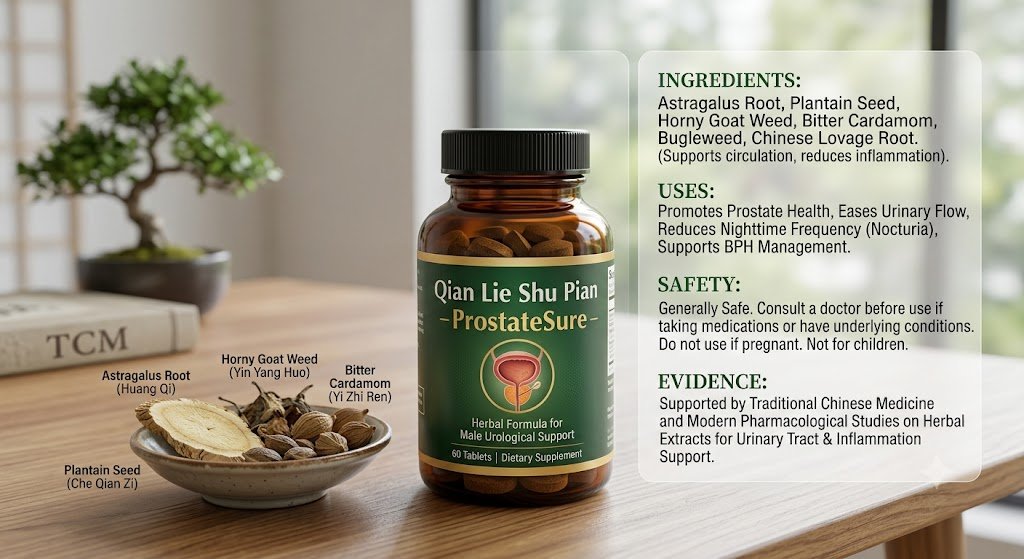
Prostate health is one of those topics that many men avoid discussing until it becomes an unavoidable issue. As men age, the prostate gland naturally undergoes changes that can significantly impact daily comfort, sleep quality, and overall well-being. While modern pharmaceutical interventions are widely available, a growing number of individuals are turning toward time-tested traditional remedies to manage their health proactively.
Among the most prominent natural interventions in Traditional Chinese Medicine (TCM) for male urological health is Qian Lie Shu Pian (often marketed internationally or formulated under names like ProstateSure). This classic herbal formulation is designed specifically to target the underlying imbalances that lead to prostate discomfort, frequent urination, and localized inflammation.
In this comprehensive guide, we will break down everything you need to know about Qian Lie Shu Pian / ProstateSure. From its intricate herbal ingredients and traditional uses to modern safety profiles and scientific evidence, this article provides an honest, human-centered, and deeply researched look into this popular natural supplement.
Understanding the Prostate and the TCM Approach
To appreciate how Qian Lie Shu Pian works, it helps to look at the prostate through two different lenses: modern anatomy and traditional energetics.
In modern medicine, the prostate is a small, walnut-sized gland located just below the bladder in men. It surrounds the urethra, the tube that carries urine out of the body. As men cross the age of 40 or 50, the prostate often begins to enlarge—a condition known as Benign Prostatic Hyperplasia (BPH). Because of its location, an enlarged prostate squeezes the urethra, leading to classic symptoms like a weak urine stream, difficulty starting urination, and the frustrating need to wake up multiple times during the night (nocturia).
Traditional Chinese Medicine views these symptoms through a completely different framework. Rather than focusing solely on the physical enlargement of the gland, TCM attributes prostate issues to three main internal imbalances:
-
Damp-Heat in the Lower Jiao: A state of localized inflammation, stagnation, or mild infection in the pelvic region.
-
Qi Stagnation and Blood Stasis: Poor circulation of energy and blood in the lower abdomen, causing aching, pressure, or structural swelling.
-
Kidney Deficiency: Weakness in the energetic reserves of the kidneys (specifically Kidney Yang or Kidney Yin), which govern fluid metabolism and urinary control.
Qian Lie Shu Pian is specifically formulated to address all three of these pillars simultaneously. Instead of relying on a single “magic bullet” ingredient, it blends multiple herbs that work synergistically to clear heat, drain dampness, invigorate blood flow, and fortify the body’s core energy.
The Core Ingredients of Qian Lie Shu Pian (ProstateSure)
The efficacy of any herbal compound lies entirely in its formulation. Qian Lie Shu Pian blends premium, natural botanicals that have been utilized in eastern medicine for centuries.
| Chinese/Common Name | Botanical Name | Primary Role in Prostate Health |
| Huang Qi (Astragalus Root) | Astragalus membranaceus | Tonifies Qi, boosts immune function, and provides cellular energy to the bladder. |
| Che Qian Zi (Plantain Seed) | Semina Plantaginis | Clears damp-heat, acts as a mild natural diuretic, and eases painful urination. |
| Yin Yang Huo (Horny Goat Weed) | Epimedium | Tonifies Kidney Yang, strengthens the lower back, and supports sexual homeostasis. |
| Yi Zhi Ren (Bitter Cardamom) | Fructus Alpiniae Oxyphyllae | Warms the kidneys, restrains fluids, and reduces frequent nocturnal urination. |
| Ze Lan (Bugleweed) | Herba Lycopi | Invigorates blood circulation, breaks up stasis, and helps reduce swelling. |
| Gao Ben (Chinese Lovage Root) | Rhizoma Ligustici Sinensis | Dispels cold, relieves localized pelvic cramping, and alleviates pain. |
A Closer Look at the Key Botanicals
-
Huang Qi (Astragalus): Widely recognized in western herbalism as a potent adaptogen, Huang Qi is used here to lift the body’s defensive energy. When the urinary system is sluggish, the bladder muscles require adequate Qi (energy) to contract and empty fully. Astragalus provides that underlying muscular and systemic support.
-
Che Qian Zi (Plantain Seed): This herb is highly valued for its ability to clear fluid accumulation and soothe the urinary tract. By promoting a smooth, unhindered flow of urine, it helps flush out metabolic waste and reduces the burning sensations often associated with mild pelvic inflammation.
-
Yin Yang Huo (Epimedium): While famous worldwide for its role in boosting libido and supporting testosterone pathways, Epimedium serves a vital structural role here. It warms the reproductive system and ensures that pelvic organs receive adequate warmth and blood flow, preventing cold-induced stagnation.
-
Yi Zhi Ren (Bitter Cardamom): If your primary complaint is having to interrupt your sleep three or four times a night to visit the bathroom, this is the herb doing the heavy lifting. In TCM, it is classified as an astringent herb that “secures the essence” and stops leakage, effectively training the bladder to hold fluids more comfortably through the night.
Primary Uses and Health Benefits
While primarily sought out for age-related prostate issues, Qian Lie Shu Pian (ProstateSure) offers a multi-layered approach to the male reproductive and urinary tracts.
1. Management of BPH Symptoms
The most common application of this formula is managing the mild-to-moderate discomforts of Benign Prostatic Hyperplasia. Users often report a gradual improvement in the strength of their urinary stream, less straining at the toilet, and a more satisfying sense of complete bladder emptying.
2. Reduction of Nocturia (Nighttime Urination)
Waking up repeatedly throughout the night disrupts deep sleep cycles, leading to daytime fatigue, brain fog, and chronic stress. By strengthening fluid retention mechanics and calming bladder irritability, this formula helps men reclaim uninterrupted, restorative sleep.
3. Relief from Chronic Pelvic Discomfort
Many men experience a vague, dull ache or a sensation of heavy pressure in the perineum or lower abdomen—often categorized as chronic non-bacterial prostatitis. The blood-invigorating herbs within Qian Lie Shu Pian (like Ze Lan) assist in breaking up this localized congestion, relaxing pelvic floor tension, and reducing chronic discomfort.
4. Supporting Sexual Health and Vitality
Because the prostate plays a critical role in producing seminal fluid, its health is intrinsically linked to overall sexual function. The inclusion of Kidney-tonifying herbs ensures that as urological symptoms improve, peripheral benefits like improved vitality, better circulation, and sexual stamina are supported naturally.
Scientific Evidence and Clinical Research
For many years, remedies like Qian Lie Shu Pian were evaluated purely on historical success stories and traditional texts. However, modern pharmacology has begun taking a much closer look at these ancient mixtures, analyzing them through modern scientific methods.
Anti-Inflammatory Pathways
Modern laboratory analyses of the individual compounds in Qian Lie Shu Pian reveal high concentrations of bioflavonoids, polysaccharides, and saponins. Herbs like Astragalus and Epimedium have been shown in pharmacological trials to down-regulate pro-inflammatory cytokines (such as TNF-alpha and IL-6). By lowering these inflammatory markers in pelvic tissues, the formula helps minimize the physical swelling of the prostate tissue.
Cellular Regulation and Tissue Growth
Research published in reputable pharmacological journals indicates that certain TCM prostate formulas help regulate cell proliferation. In conditions like BPH, prostate cells multiply faster than they die off. Components within these herbal matrices have been observed to encourage healthy apoptosis (programmed cell death) in prostate tissues, gently discouraging the progressive overgrowth of the gland.
Smooth Muscle Relaxation
Much like modern pharmaceutical alpha-blockers, certain alkaloids found within traditional urological herbs help relax the smooth muscle tissues of the bladder neck and the prostate itself. When these muscles relax, physical resistance against the urethra decreases, allowing urine to flow more freely without intense physical straining.
Safety Profile, Precautions, and Side Effects
Natural does not automatically mean completely harmless. Because herbal blends contain active biochemical compounds, it is crucial to approach them with the same respect you would show to standard over-the-counter medications.
Potential Side Effects
For the vast majority of men, Qian Lie Shu Pian is highly tolerable. However, because it contains a complex blend of herbs, some individuals may experience mild transitional symptoms as their bodies adapt:
-
Digestive Sensitivity: Mild bloating, nausea, or loose stools can occasionally occur if taken on an empty stomach.
-
Dizziness or Dry Mouth: Rare, but sometimes noted due to the mild diuretic (fluid-clearing) properties of the formulation.
Who Should Avoid This Formula?
-
Pre-Existing Medical Conditions: Individuals with severe, advanced kidney disease or liver impairment should avoid complex herbal mixtures unless directly supervised by a qualified physician.
-
Before Surgery: Because herbs like Ze Lan invigorate the blood and mildly thin it to improve circulation, it is highly recommended to stop taking this supplement at least two weeks before any scheduled surgical or dental procedure to minimize bleeding risks.
-
Medication Interventions: If you are currently prescribed strong pharmaceutical alpha-blockers, 5-alpha-reductase inhibitors (like Finasteride), or blood thinners (like Warfarin), speak frankly with your urologist before introducing an herbal counterpart to avoid compounded effects.
Important Safety Note: Herbal supplements are designed to manage chronic, slow-developing, mild-to-moderate urological imbalances. If you experience an absolute, sudden inability to pass urine (acute urinary retention), severe lower back pain, high fever, or visible blood in your urine, seek emergency medical care immediately. These are signs of acute complications that require immediate clinical intervention.
Practical Guide: How to Take and Maximize Results
If you decide to incorporate Qian Lie Shu Pian or ProstateSure into your wellness regimen, consistency and lifestyle alignment are your greatest tools for success.
Dosage Guidelines
Always follow the specific instructions on your product’s label, as extract concentrations can vary between manufacturers. Generally, traditional formulas are pressed into small tablets or “teapills.” A standard dose often involves taking a specified number of tablets two to three times a day.
-
Tip: To minimize any potential stomach upset, take your dosage roughly 30 minutes after a meal with a full glass of warm water. Warm water is highly preferred in TCM practices as it aids digestive absorption and prevents cold-shock to the stomach.
What to Expect (The Timeline)
Unlike synthetic pharmaceutical options that can force immediate chemical shifts within days, natural herbal protocols function by gently altering tissue environments and strengthening systemic deficiencies over time.
-
Weeks 1–2: Most men begin noticing a subtle stabilization in their nighttime bathroom visits and a cleaner urinary stream.
-
Weeks 4–8: This is typically the window where the formula reaches its full cumulative therapeutic effect. Pelvic heaviness decreases, and urinary habits become far more predictable.
Complementary Lifestyle Practices
To get the absolute most out of your prostate health journey, pair your herbal regimen with these proactive daily habits:
-
Limit Fluids Before Bed: Stop drinking large quantities of water, herbal teas, or juices at least two to three hours before going to sleep to give your bladder a restful head start.
-
Avoid Bladder Irritants: Excess caffeine, highly spicy foods, and alcohol can directly irritate the lining of the bladder and trigger prostate inflammation. Keep these to a minimum.
-
Keep Moving: Avoid prolonged sitting for hours at a time. Sitting applies direct physical pressure to the pelvic floor and restricts blood flow to the prostate. Take brief walking breaks every hour to keep lower-body circulation moving dynamically.
Final Thoughts: A Balanced Approach to Male Wellness
Qian Lie Shu Pian (ProstateSure) represents a thoughtful, holistic bridge between historical healing traditions and modern male health needs. By focusing on systemic balance—clearing inflammation, promoting fluid movement, and restoring internal vital energy—it offers a gentle yet remarkably effective alternative for maintaining a resilient, comfortable urological system.
If you are struggling with the frustrating daily realities of aging prostate health, this traditional formula is undoubtedly a worthy option to explore. Keep your lines of communication open with your primary doctor, monitor your body’s natural responses, and embrace a holistic lifestyle to reclaim your comfort, your sleep, and your peace of mind.

Qian Lie Shu Pian – ProstateSure at a Glance
Qian Lie Shu Pian – ProstateSure is a multi-herb dietary supplement marketed to support prostate comfort and normal urinary function.
The formula is based on concepts used in Traditional Chinese Medicine, but it is not an approved treatment for prostate disease.
Men experiencing urinary changes should obtain a medical assessment instead of relying on a supplement to identify or treat the cause.
Quick Bio Feature Table
| Feature | Information |
|---|---|
| Product name | Qian Lie Shu Pian – ProstateSure |
| Alternative name | Qian Lie Shu Wan |
| Product category | Traditional Chinese herbal dietary supplement |
| Common brand | Guang Ci Tang |
| Manufacturer listed by retailers | ActiveHerb |
| Available forms | Tablets or small teapills, depending on the product |
| Common package size | 200 tablets or teapills |
| Marketed purpose | Prostate, urinary-flow, and general male wellness support |
| Formula style | Concentrated multi-herb Chinese formula |
| Intended users | Adults, primarily men seeking urinary or prostate support |
| Medical status | Dietary supplement, not a prescription BPH medicine |
| Evidence level | Product-specific clinical evidence appears limited |
| Important caution | Contains ingredients that may cause side effects or interact with medicines |
What Is Qian Lie Shu Pian – ProstateSure?
Qian Lie Shu Pian is the Chinese name used for a proprietary herbal formula sold under the English product name ProstateSure. The words pian and wan generally refer to different dosage forms. Pian commonly describes tablets, while wan is often used for small herbal pills or teapills. Retail listings may therefore use either Qian Lie Shu Pian or Qian Lie Shu Wan for closely related versions of the product.
The manufacturer presents the formula as a Traditional Chinese Medicine product intended to “tonify the Kidneys” and support prostate and urinary health. In this context, “Kidneys” refers to a broader TCM functional concept rather than only the anatomical kidneys recognized in modern medicine. Product descriptions also use traditional ideas such as draining dampness, warming kidney energy, and encouraging normal urination. These phrases describe the formula’s traditional rationale and should not be interpreted as clinically proven biological effects.
Common listings describe the Guang Ci Tang version as a concentrated formula containing 200 tablets or teapills. Some versions are advertised as 200 milligrams per unit and produced from a concentrated herbal decoction. However, packaging, concentration, suggested serving, and ingredient proportions can change, so buyers should rely on the label printed on their specific bottle rather than information copied from an online seller.
Ingredients in Qian Lie Shu Pian – ProstateSure
A current retail ingredient listing for the teapill version includes prepared rehmannia root, Job’s tears seed, winter melon seed, Asiatic dogwood fruit, Chinese yam rhizome, peach seed, tree peony root bark, Asian water plantain rhizome, poria, cang-zhu atractylodes rhizome, Chinese licorice, cassia twig, processed Sichuan aconite lateral root, Chinese chive seed, and epimedium. Corn starch, dextrin, and magnesium stearate may be included as inactive manufacturing ingredients.
Rehmannia, Chinese Yam, and Dogwood Fruit
Prepared rehmannia, Chinese yam, and dogwood fruit frequently appear together in traditional Chinese formulas associated with kidney and vitality support. Their inclusion helps explain why ProstateSure is promoted through TCM language related to aging, weakness, and male wellness.
That traditional history does not establish that the combined ingredients shrink an enlarged prostate or produce the same effect as prescription medication. Traditional use, laboratory investigation, and reliable human clinical evidence are different forms of information and should not be treated as interchangeable.
Water Plantain, Poria, Job’s Tears, and Winter Melon Seed
Water plantain, poria, Job’s tears, and winter melon seed are traditionally included in formulas intended to influence fluid balance or urination. Product marketing connects these ingredients with urinary comfort and normal flow.
Urinary frequency, weak flow, or nighttime urination can have many causes, however. Possible explanations include benign prostatic hyperplasia, overactive bladder, urinary infection, prostatitis, diabetes, medication effects, bladder stones, or neurological problems. A formula associated with urination in traditional practice cannot determine which condition is responsible.
Peach Seed and Tree Peony Bark
Peach seed and tree peony root bark are traditionally discussed in relation to circulation and what TCM practitioners call blood stagnation. Peach seed may also be relevant to people taking medicines that influence bleeding or clotting. Anyone using anticoagulants, antiplatelet drugs, or multiple cardiovascular medicines should have the complete formula reviewed by a qualified healthcare professional.
Processed Aconite and Licorice Root
Two ingredients deserve particular attention: processed aconite and Chinese licorice.
Aconite species naturally contain potent compounds that can affect the nervous system and heart. Traditional processing is intended to reduce toxicity, but consumers should not assume that “processed” means risk-free. Products containing aconite should come from a reputable manufacturer and should not be combined casually with other herbal medicines.
Licorice root contains compounds that can affect blood pressure, potassium levels, fluid retention, and heart rhythm when consumed in sufficiently high amounts or for extended periods. Risk may be greater in people with hypertension, kidney disease, heart disease, or high salt intake. Licorice can also interact with medicines, including corticosteroids and certain cardiovascular treatments.
What Is Qian Lie Shu Pian – ProstateSure Used For?
The product is primarily marketed for maintaining prostate health, supporting comfortable urination, promoting normal urinary flow, and supporting male vitality. These are supplement-support claims rather than approved disease-treatment indications. Retailers and manufacturers are not establishing a medical diagnosis when they describe the formula in this way.
People commonly searching for this product may be experiencing:
- A weak or interrupted urinary stream
- Difficulty beginning urination
- Dribbling after urination
- A feeling that the bladder has not emptied
- Frequent daytime urination
- Sudden urinary urgency
- Repeated nighttime bathroom visits
- Mild pelvic or urinary discomfort
These complaints overlap with lower urinary tract symptoms associated with benign prostatic hyperplasia, commonly called BPH or an enlarged prostate. BPH is a noncancerous enlargement of the prostate, but similar symptoms may also occur with infections, bladder disorders, prostatitis, and prostate cancer. Symptom severity is not always directly related to prostate size.
Does Qian Lie Shu Pian – ProstateSure Really Work?
Publicly available descriptions explain the product’s traditional formulation and intended support role, but they do not provide strong product-specific evidence from large, independent, randomized clinical trials. As a result, it is not possible to conclude confidently that ProstateSure treats BPH, reduces prostate size, prevents urinary retention, or performs as well as established medication.
Research into herbal and complementary approaches for enlarged-prostate symptoms has produced mixed results. The National Center for Complementary and Integrative Health notes that some plant-based products have shown limited short-term benefits, but many studies are small, brief, or based on preparations that differ in dose and composition. Findings for one extract or standardized product cannot automatically be applied to a different multi-herb formula.
This distinction matters because dietary supplements sold under similar names can differ in concentration, manufacturing quality, and ingredient proportions. A positive study involving saw palmetto, nettle root, or another individual herb would not prove that ProstateSure has the same effect.
Customer reviews are also insufficient for confirming effectiveness. Urinary symptoms naturally fluctuate, lifestyle changes may occur at the same time, and users may be taking prescription treatment alongside the supplement. Personal experiences can generate useful questions, but they cannot replace controlled clinical research.
Prostate Symptoms That Require Medical Evaluation
Men should discuss new, persistent, or worsening urinary symptoms with a doctor or urologist. A medical evaluation may include a symptom history, medication review, physical examination, urine testing, assessment of bladder emptying, and selected prostate tests. Testing is chosen according to age, symptoms, medical history, and clinical findings.
Immediate medical attention is particularly important when a person:
- Cannot urinate at all
- Has blood in the urine
- Develops fever and chills with painful or urgent urination
- Experiences severe lower-abdominal or urinary-tract pain
- Has rapidly worsening symptoms
- Develops vomiting, confusion, severe weakness, or fainting
- Experiences chest symptoms, numbness, or an irregular heartbeat after taking an herbal product
Complete urinary retention is an emergency. Delaying treatment can damage the bladder and, in some cases, affect kidney function. Blood in the urine and fever with urinary symptoms also require prompt investigation.
Safety, Side Effects, and Possible Interactions
The absence of synthetic drugs does not automatically make an herbal product safe for every person. Multi-herb formulas can cause digestive upset, allergic reactions, dizziness, changes in blood pressure, electrolyte disturbances, or other unwanted effects. The risk depends on the ingredients, dose, manufacturing quality, duration of use, and the user’s health conditions.
Chinese herbal products have occasionally been found to contain contaminants, heavy metals, undeclared drugs, toxins, or ingredients that differ from the label. NCCIH also warns that some Chinese herbs can interact with medications or be unsafe for people with particular medical conditions. Choosing a traceable product with clear labeling and credible quality testing is therefore important.
A healthcare professional should review the product before use when a person:
- Takes blood thinners or antiplatelet medication
- Uses blood-pressure or heart-rhythm medicines
- Takes diuretics or medicines affecting potassium
- Uses prescription medication for BPH
- Has kidney, liver, or cardiovascular disease
- Has uncontrolled hypertension
- Is preparing for surgery
- Has a history of serious herbal reactions
- Takes several supplements or traditional formulas at once
Herbal supplements can increase, decrease, or otherwise alter the effects of prescription and nonprescription medicines. Information about many possible interactions remains incomplete, which makes full disclosure to doctors and pharmacists especially important.
ProstateSure Versus Established BPH Treatment
Medical treatment for enlarged-prostate symptoms is selected according to symptom severity, bladder function, prostate characteristics, complications, and patient preferences. Men with mild symptoms that do not significantly affect daily life may be advised to use watchful waiting and practical lifestyle changes.
Common measures include limiting drinks near bedtime, reducing alcohol and caffeine, staying physically active, avoiding prolonged urine holding, and reviewing medicines that may worsen urinary symptoms. Decongestants, some antihistamines, certain antidepressants, tranquilizers, and diuretics can contribute to urinary difficulty in susceptible people.
When treatment is needed, clinicians may prescribe alpha blockers to relax muscles around the prostate and bladder outlet, 5-alpha-reductase inhibitors to slow prostate growth or reduce prostate volume, or phosphodiesterase-5 inhibitors for selected patients. Combination treatment may be appropriate in some cases. Minimally invasive procedures and surgery are available for severe symptoms, complications, or inadequate response to medication.
ProstateSure should not be presented as a direct substitute for these treatments. Prescription medicines and procedures have specific indications, studied benefits, recognized risks, and monitoring requirements. An herbal supplement may be considered only as a complementary choice after the cause of the symptoms has been evaluated.
How to Evaluate Qian Lie Shu Pian Before Buying
Examine the physical bottle and packaging instead of relying exclusively on a marketplace description. Confirm the manufacturer, complete ingredient list, lot number, expiration date, serving directions, safety warnings, and tamper-evident seal.
Look for information about manufacturing standards and independent testing for identity, microorganisms, pesticides, heavy metals, and undeclared pharmaceuticals. Statements such as “natural,” “traditional,” or “premium quality” are marketing terms and do not, by themselves, verify purity or effectiveness.
Avoid products that promise to cure prostate disease, guarantee rapid prostate shrinkage, replace medical testing, or prevent cancer. These claims go beyond the evidence available for dietary supplements.
Anyone choosing to take the product should follow the current bottle directions and avoid increasing the serving in an attempt to obtain faster results. Starting several supplements simultaneously also makes it difficult to identify which one caused a benefit or side effect. Keep a written record of urinary symptoms, nighttime bathroom visits, medicines, supplements, and adverse reactions to discuss at medical appointments.
Conclusion
Qian Lie Shu Pian – ProstateSure is a concentrated Traditional Chinese Medicine formula marketed for prostate, urinary, and male wellness support. Its ingredient profile reflects a traditional approach involving vitality, fluid balance, circulation, and urinary comfort. That history may explain why some consumers are interested in the product, but it does not establish that the formula treats BPH or replaces evidence-based medical care.
The most responsible approach is to separate traditional claims from proven clinical outcomes. Persistent urinary symptoms deserve professional assessment because an enlarged prostate is only one possible cause. Men considering ProstateSure should review the complete label, check for interactions, select a traceable manufacturer, and discuss the formula with a doctor or pharmacist—particularly when prescription medicines or chronic health conditions are involved.
Frequently Asked Questions
1. What is Qian Lie Shu Pian – ProstateSure intended to support?
It is marketed as a Traditional Chinese herbal supplement for prostate wellness, urinary comfort, normal urine flow, and general male vitality. These are supportive marketing claims, not proof that it can diagnose, cure, or prevent a prostate condition.
2. Is ProstateSure an approved treatment for an enlarged prostate?
No. It is sold as a dietary supplement rather than an approved prescription treatment for benign prostatic hyperplasia. Men with bothersome urinary symptoms should be evaluated to determine the cause and discuss evidence-based options.
3. Are Qian Lie Shu Pian and Qian Lie Shu Wan the same?
The names are often used for tablet and teapill versions of a related formula. However, concentration, inactive ingredients, serving directions, and even formula details may vary between manufacturers or product versions. Always compare the labels directly.
4. Can ProstateSure be taken with prescription prostate medication?
It should not be combined automatically with tamsulosin, finasteride, dutasteride, tadalafil, blood-pressure medication, or other treatments. Multi-herb products may affect blood pressure, fluid balance, clotting, or drug metabolism. A doctor or pharmacist should review the complete ingredient list first.
5. How long does Qian Lie Shu Pian take to work?
There is no reliable, clinically established timeline for this specific product. A lack of improvement should not lead to progressively larger servings. Persistent, worsening, or severe urinary symptoms require medical evaluation rather than prolonged self-treatment.

Qianrun3c is an online name associated with consumer electronics, smartwatches, and a growing multi-topic publishing website.
The term attracts curiosity because its current digital presence differs from its earlier technology-focused identity.
Understanding that evolution helps readers distinguish between its historical product connections and present-day informational content.
Quick Bio
| Feature | Details |
|---|---|
| Name | Qianrun3c |
| Current identity | Multi-category online content platform |
| Earlier association | Smartwatches, fitness trackers, and consumer electronics |
| Meaning of “3C” | Computers, communication, and consumer electronics |
| Main content areas | Technology, business, finance, crypto, fashion, sports, gaming, health, and general blogs |
| Typical audience | Readers researching unfamiliar terms, products, trends, and online topics |
| Content format | Guides, explainers, definitions, reviews, and informational articles |
| Access method | Web browser on desktop, tablet, or mobile |
| Account required | Generally not required for reading public articles |
| Best use | Initial topic discovery and general background research |
| Important precaution | Verify health, financial, legal, or product claims through authoritative sources |
| Current status | Active website with recently published content |
What Is Qianrun3c?
Qianrun3c is best understood today as a general-interest publishing website covering subjects from emerging technology and business concepts to lifestyle, health, entertainment, gaming, and finance. Its homepage organizes material into multiple categories rather than concentrating on one tightly defined industry.
The name can be confusing because older online references connect it with a Shenzhen-based electronics operation offering smartwatches and fitness-tracking devices. Current public traces therefore suggest two recognizable stages: an earlier connection with consumer electronics and a newer identity as a broad informational website.
There is limited publicly visible information explaining exactly how or when this transition occurred. Readers should avoid assuming that every historical product listing, social profile, and current article belongs to the same management team unless that relationship is formally confirmed.
What Does the Name Qianrun3c Mean?
The first part of the name, Qianrun, appears to function as a brand or business identifier. It may have been selected to create a recognizable international name for products, online profiles, and digital publishing.
The “3C” portion has a more established commercial meaning. In the electronics industry, 3C commonly refers to computers, communication, and consumer electronics. The abbreviation is often used to group products such as smartphones, tablets, smartwatches, accessories, networking equipment, and other personal devices.
This interpretation fits the name’s earlier association with wearable technology. It also explains why many users searching for the term may expect to find a technology company, gadget supplier, or electronics store rather than a general content website.
The Earlier Consumer Electronics Connection
Older web listings identify Shenzhen Qianrun Trade Co., Ltd. as a supplier or manufacturer connected with fitness trackers, Bluetooth watches, calling watches, and wearable health-monitoring products. Examples included devices with touch displays, heart-rate tracking, temperature monitoring, SIM support, and water-resistant designs.
A related social profile also described the brand in connection with smartwatches, tablets, television boxes, and mobile-device products. A YouTube presence using the Qianrun smartwatch name contains a substantial collection of wearable-device videos, strengthening the historical technology connection.
However, old supplier pages should not automatically be treated as evidence of current inventory, warranties, prices, or customer service. Product listings can remain indexed long after models are discontinued or business arrangements change.
Anyone researching an older Qianrun device should verify the precise model number, operating system, companion application, charging method, and smartphone compatibility. Generic smartwatch names are often used across several manufacturers, so visual similarity alone may not identify the correct product.
How Qianrun3c Functions Today
The current website operates like a digital magazine or informational blog. Visitors can open articles without following a traditional online-store process, and the visible navigation focuses on topic categories rather than product collections.
Its menu includes areas such as business, blogs, sports, technology, fashion, crypto, finance, CBD, and gaming. Recent pages also include health-related material and explainers about unusual names, digital terms, public figures, telephone numbers, products, and emerging concepts.
This wide editorial range means the platform may appeal to readers who enjoy discovering unfamiliar topics. It also means visitors should pay attention to the category, publication date, author information, and supporting evidence attached to each article.
Main Topics Covered on the Website
Technology and Digital Concepts
Technology is one of the platform’s most visible sections. Its articles discuss digital integration, data transmission, mobile ecosystems, streaming services, software-like concepts, consumer devices, and developing online terminology.
The technology archive includes a mixture of recognizable subjects and lesser-known terms. This approach can help readers obtain an introductory explanation, although highly technical claims may require confirmation from product documentation, developers, academic research, or recognized industry organizations.
Business and Online Platforms
The business category explores companies, digital services, property-related ideas, public personalities, phone-number searches, and broader commercial developments. Some articles are structured as beginner-friendly guides rather than detailed investigative reports.
This format suits readers who need a starting point. It is less suitable as the only source for investment decisions, company verification, contractual matters, or professional due diligence.
Finance and Cryptocurrency
Finance and crypto categories allow the website to address subjects connected with money, digital assets, commercial trends, and online markets. These areas can change quickly, and even recently published information may become outdated after market movements or regulatory changes.
Readers should compare financial information with official regulators, established exchanges, audited company disclosures, or licensed professionals. No general blog article should replace personalized financial advice.
Lifestyle, Fashion, Sports, and Gaming
Broader lifestyle coverage gives the platform a more magazine-like character. Fashion, sports, gaming, and entertainment topics can attract casual readers who want accessible explanations rather than specialist-level analysis.
These categories also create opportunities for product comparisons, cultural commentary, game guides, trend reports, and practical tips. The strongest articles in these areas are those that clearly identify their sources, update dates, and real-world experience.
Health and Wellness
Health-related articles require additional care because inaccurate information can affect personal well-being. A current example on the website discusses a supplement associated with hair health, illustrating the platform’s expansion into wellness content.
Before following treatment, supplement, dosage, or diagnostic advice, readers should consult a qualified healthcare professional. They should also check whether claims are supported by recognized medical authorities and peer-reviewed evidence.
Why Is Qianrun3c Gaining Search Interest?
One reason for growing curiosity is the unusual structure of the name. Users who see it in a domain, product listing, profile, backlink, or search result may not immediately know whether it represents a company, device brand, website, username, or software platform.
Its mixed history creates additional search demand. A person researching an older smartwatch may encounter the same term that another person finds while browsing a recent informational article.
The site also publishes content about obscure or newly circulating phrases. Such topics often have limited established information, encouraging readers to search for explanations and alternative perspectives.
Is Qianrun3c a Store or a Blog?
At present, the primary domain appears to function mainly as a content publication rather than a conventional electronics store. Its public pages emphasize articles, archives, trending posts, and editorial categories.
Historical listings, however, show that the name has been used in connection with smartwatch manufacturing or supply. That does not prove the present content website still sells, manufactures, supports, or guarantees those devices.
This distinction matters for users seeking customer support. A blog contact address may not be able to provide firmware, repair parts, refunds, pairing instructions, or warranty service for an older wearable purchased through a separate marketplace.
Strengths of the Platform
One advantage is topic variety. Readers can move between technology, business, lifestyle, gaming, finance, and other subjects without visiting multiple websites.
Another strength is accessibility. Many articles use explanatory titles and beginner-oriented language, making unfamiliar ideas easier to approach. The format is particularly useful when a reader wants a quick definition before beginning deeper research.
The site also maintains category archives and displays recent or trending material. This organization helps visitors discover related pages and understand the general editorial direction of the platform.
Important Limitations to Consider
The broad subject range can make it difficult to identify a single area of editorial expertise. A website that covers technology, health, finance, fashion, gaming, and culture must use strong sourcing and specialist review to maintain equal accuracy across every category.
Publicly visible information about the site’s ownership, editorial standards, writers, corrections process, and relationship with the earlier electronics business is limited. The available team page contains little detailed professional information.
Some published topics involve newly coined or poorly documented terms. In such cases, readers should distinguish between verified definitions, editorial interpretation, predictions, and speculative explanations.
How to Evaluate an Article Before Trusting It
Start by checking the publication date and author identity. A recent date can be helpful, but it does not guarantee that every claim is current or correct.
Look for links to original research, official product pages, government agencies, established news organizations, or direct company statements. Strong articles make it easy to understand where important information originated.
Compare the key claim with at least two independent sources. This is particularly important for medical treatments, investment opportunities, product specifications, legal questions, personal allegations, and rapidly changing technology.
Google’s own publishing guidance emphasizes helpful, reliable, people-first content and encourages clear evidence of experience, expertise, authority, and trust. These principles provide a useful framework for assessing any informational website.
Safe Browsing Tips for Visitors
Confirm that the address is spelled correctly before opening a page. Similar-looking domains may be unrelated, and mistyped links can lead to misleading websites.
Check the connection information shown beside the address bar. Chrome recommends reviewing the site-information symbol to determine whether a connection is secure, not secure, or considered dangerous.
Avoid entering payment information, passwords, identity documents, or banking details unless you understand why they are required and have verified the recipient. Reading a public blog should not normally require highly sensitive personal data.
Treat unexpected download buttons, browser-notification requests, and aggressive advertisements cautiously. Keeping the browser, operating system, and security software updated adds another layer of protection.
Opportunities for Future Development
The platform could strengthen its identity by publishing a detailed About page explaining its origins, ownership, editorial goals, and relationship—if any—to the historical electronics operation.
Clear author biographies would help readers understand who researched each topic. Expert review labels would be especially valuable for health, finance, cybersecurity, and other high-impact subjects.
The site could also improve topical organization by building deeper content hubs. Instead of covering isolated terms, it could connect beginner guides, comparisons, definitions, practical tutorials, and expert commentary within each major category.
Original testing, interviews, photographs, case studies, and first-hand experience would further distinguish its articles from generic web summaries. Google continues to recommend unique, valuable, people-focused material for both traditional results and newer AI-assisted search experiences.
Conclusion
Qianrun3c has an unusual digital identity shaped by both consumer electronics history and modern online publishing. Earlier records associate the name with Shenzhen-based smartwatch and fitness-tracker products, while the current domain presents articles across technology, business, health, finance, fashion, gaming, sports, and general-interest subjects.
The website can be useful for discovering topics and obtaining introductory explanations. Its broad coverage, however, makes independent verification essential—particularly when an article discusses health, money, safety, technical specifications, or an unfamiliar term with little established documentation.
Readers will get the greatest value by using the platform as the beginning of their research rather than the final authority. Checking dates, authors, original sources, security indicators, and competing viewpoints leads to a safer and more informed browsing experience.
Frequently Asked Questions
1. What is Qianrun3c used for?
It currently functions mainly as a multi-topic informational website. Visitors can read guides and articles about technology, business, finance, gaming, health, fashion, sports, online trends, and unfamiliar terms.
2. Is Qianrun3c a smartwatch company?
Older supplier listings and social profiles associate the name with smartwatches, fitness trackers, and other consumer electronics. The current website, however, appears to operate primarily as a content publication rather than a dedicated smartwatch store.
3. What does 3C mean in the name?
In the consumer-technology industry, 3C commonly means computers, communication, and consumer electronics. The abbreviation matches the name’s historical connection with smart devices and wearable technology.
4. Is the information on Qianrun3c reliable?
Reliability may vary by article and subject. Readers should review the author, publication date, evidence, citations, and independent sources, especially for medical, financial, legal, or technical claims.
5. Can I buy products directly from Qianrun3c?
The current main website does not appear to operate like a standard online electronics shop. Historical product listings may exist on third-party supplier platforms, but users should verify the seller, product status, warranty, compatibility, and payment protection before purchasing.


Qian Lie Shu Pian – ProstateSure: Ingredients, Uses, Safety, and Evidence

Qian Lie Shu Pian – ProstateSure: Ingredients, Uses, Safety, and Evidence

Qian Yanyue Tang Anqi: Facts, Rumors, and the Story Behind the Viral Search

Tatasecorg: Everything You Need to Know About This Digital Platform

Valplekar – A Complete and Updated Guide to Its Meaning, Uses, and Growing Importance

Unveiling Acamento: The Art and Science Behind Its Craft
-
 Blogs5 months ago
Tatasecorg: Everything You Need to Know About This Digital Platform
-
 Blogs5 months ago
Valplekar – A Complete and Updated Guide to Its Meaning, Uses, and Growing Importance
-
 Blogs5 months ago
Unveiling Acamento: The Art and Science Behind Its Craft
-

 Blogs5 months ago
Understanding Internetchocks: What They Are and Why They Matter
-

 Blogs5 months ago
The Ultimate Guide to Claalekfo: Revolutionizing Modern Efficiency
-

 Blogs5 months ago
Exploring Awius: Innovative Solutions for Modern Challenges
-

 Blogs5 months ago
Exploring Epcylon: The Future of Digital Innovation
-

 Business4 months ago
Sofoximmo: A Complete Guide to Understanding This Modern Real Estate Platform