
Blogs
123safe67: The Complete Guide to Understanding Its Purpose, Benefits, and Practical Uses


Introduction to 123safe67
In today’s fast-evolving digital landscape, terms like 123safe67 are gaining attention for their potential applications and relevance across different domains. Whether you’ve encountered online, in tech discussions, or through professional environments, understanding what it represents can give you a significant advantage.
At its core, 123safe67 can be interpreted as a concept, system, or identifier that emphasizes security, structure, and reliability. While it may sound like a random combination of numbers and letters, its growing usage hints at deeper functionality tied to modern digital practices.
This guide will break down everything you need to know about 123afe67, from its possible meanings to real-world applications, benefits, and future potential.
What Is 123safe7?
Understanding the Basics
123safe67 is best understood as a structured identifier or keyword often associated with safety protocols, secure systems, or unique tagging mechanisms in digital environments.
It typically reflects three core elements:
- “123” – Represents sequence, order, or simplicity
- “safe” – Highlights protection, security, or trust
- “67” – Suggests uniqueness or versioning
Together, symbolizes a balanced approach to organized and secure operations.
Why Matters in Today’s World
In an era where data security, authentication, and digital identity are critical, structured identifiers like 123safe67 play an essential role.
Key Reasons for Its Importance
- Enhanced Security – Helps create unique identifiers that are harder to replicate
- Better Organization – Allows systems to categorize and track information efficiently
- Scalability – Works well in systems that require multiple unique entries
- User-Friendly Format – Easy to remember compared to complex codes
By combining simplicity with structure, bridges the gap between usability and security.
Common Uses of 123safe67
1. Digital Security Systems
One of the most common applications of 123safe67 is in security protocols. It can be used as:
- A password component
- A system-generated token
- A secure access key
Its mixed format makes it both memorable and difficult to guess, which is ideal for security purposes.
2. Data Identification and Tagging
In databases and large systems, can serve as a:
- Unique identifier (UID)
- Tracking code
- File naming convention
This helps organizations maintain accurate records and easy retrieval systems.
3. Software Development
Developers often rely on structured naming systems like 123safe67 to:
- Label test environments
- Identify versions
- Manage internal systems
Its format provides clarity without adding unnecessary complexity.
4. Online Platforms and Accounts
Many platforms require unique usernames or IDs. fits perfectly because it:
- Avoids duplication
- Maintains readability
- Meets most platform requirements
Key Features of 123safe67
1. Simplicity with Structure
Unlike overly complex identifiers, is straightforward yet organized. This makes it accessible to both beginners and experts.
2. High Versatility
It can be adapted across multiple industries, including:
- Technology
- Education
- Business systems
- E-commerce
3. Improved Security Potential
While simple, 123safe67 still offers a layer of unpredictability due to its mixed composition.
4. Easy Memorability
Compared to random strings like X9#kL@2!pQ, 123sae67 is much easier to remember and use consistently.
Advantages of Using 123sae67
Enhanced Efficiency
Using a structured keyword like reduces confusion and improves workflow, especially in environments requiring repeated identification.
Reduced Errors
Simple yet clear identifiers minimize the chances of:
- Typing mistakes
- Miscommunication
- Data misplacement
Better User Experience
Whether for login credentials or system labeling, ensures a smoother experience for users.
Flexibility Across Systems
It can be used in both manual and automated systems, making it highly adaptable.
Best Practices for Using 123safe67
To get the most out of 123safe67, consider the following tips:
1. Combine It with Additional Security Layers
Use 123safe67 alongside:
- Two-factor authentication (2FA)
- Encryption tools
- Secure access protocols
2. Avoid Overuse
While effective, using repeatedly across multiple platforms may reduce its uniqueness.
3. Customize When Needed
You can modify it slightly for different purposes:
- 123safe67_admin
4. Keep It Confidential
If used in sensitive environments, treat 123sfe67 like any secure credential.
Potential Limitations of 123safe67
While 123safe67 offers several benefits, it’s important to understand its limitations:
Predictability
Because it follows a recognizable pattern, it may not be suitable as a standalone high-security password.
Limited Complexity
Advanced systems may require:
- Special characters
- Longer strings
- Multi-layer authentication
Risk of Duplication
If widely used, the uniqueness of 123safe67 could diminish over time.
How 123safe67 Compares to Other Identifiers
| Feature | 123safe67 | Random Strings | Complex Codes |
|---|---|---|---|
| Memorability | High | Low | Very Low |
| Security | Moderate | High | Very High |
| Usability | Excellent | Moderate | Low |
| Flexibility | High | Moderate | Moderate |
This comparison highlights how 123safe67 strikes a balance between usability and functionality.
Real-World Scenarios Where 123safe67 Works Best
Small Business Systems
For managing inventory or customer IDs, 123safe67 provides clarity and ease of use.
Educational Platforms
Teachers and administrators can use 123safe67 for:
- Student IDs
- Course codes
- Assignment tracking
Personal Use
Individuals can use 123safe67 for:
- File organization
- Simple password structures
- Personal tracking systems
Future Potential of 123safe67
As digital systems continue to evolve, identifiers like 123safe67 may become even more relevant.
Possible Developments
- Integration into AI-driven systems
- Use in automated tagging and classification
- Expansion into blockchain-based identification
The simplicity of 123safe67 makes it adaptable to future innovations.
Tips to Make 123safe67 Even More Effective
- Add symbols: 123safe67!@#
- Extend length: 123safe6789secure
- Use context: user_123safe67_login
These enhancements can significantly improve both security and usability.
Conclusion
123safe67 may appear simple at first glance, but its value lies in its balance of structure, clarity, and adaptability. Whether used in digital systems, personal organization, or professional environments, it offers a practical solution for identification and security needs.
However, like any tool, its effectiveness depends on how it is used. Pairing 123safe67 with modern security practices ensures you get the best of both worlds—ease of use and robust protection.
If you’re looking for a reliable, easy-to-implement identifier, 123safe67 is a strong contender worth considering.
FAQs About 123safe67
1. Is 123safe67 a secure password?
123safe67 offers moderate security but should be combined with additional elements like symbols or multi-factor authentication for stronger protection.
2. Can I use 123safe67 for multiple accounts?
It’s not recommended. Reusing 123safe67 across multiple platforms can increase security risks.
3. What makes 123safe67 unique?
Its combination of numbers and meaningful text makes it both memorable and functional.
4. Is 123safe67 suitable for professional use?
Yes, especially for identification systems, tagging, and non-critical security applications.
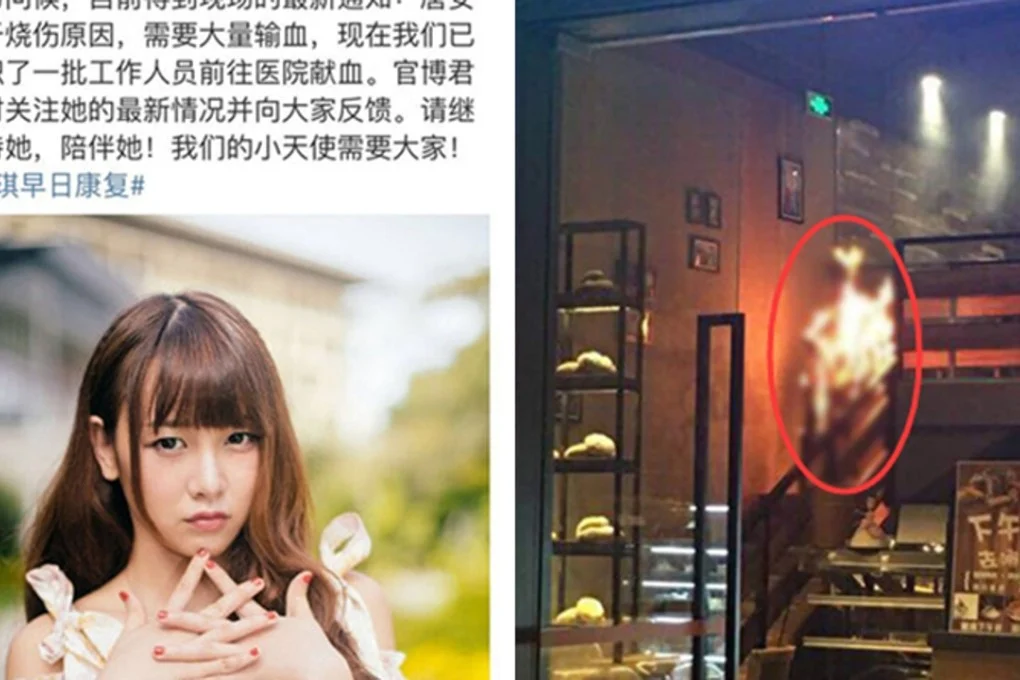
Who Are Qian Yanyue and Tang Anqi?
The search phrase Qian Yanyue Tang Anqi connects two names that appeared together during a highly publicized Chinese entertainment controversy in 2016.
Tang Anqi was a rising SNH48 singer who suffered life-threatening burns in a Shanghai café, while Qian Yanyue was a private individual whose name was circulated online afterward.
However, reliable reporting never established that Qian Yanyue was responsible for the incident, and she publicly denied even knowing Tang Anqi.
Quick Bio Feature Table
| Feature | Tang Anqi | Qian Yanyue |
|---|---|---|
| Chinese name | 唐安琪 | 钱琰玥 |
| Public status | Singer, performer, former active SNH48 member | Private individual |
| Known for | SNH48 Team NII and recovery from severe burns | Being named in unverified online discussions |
| Connection to the 2016 incident | Person who suffered serious burn injuries | Denied being Tang Anqi’s companion or knowing her |
| Verified involvement | Tang was present at the café and sustained burns | No reliable public evidence established involvement |
| Public response | Later described the event as an accident caused by her own carelessness | Said she had been wrongly identified and contacted police |
| Recent public status | Reportedly returned through the virtual performer identity Zeyin Melody | No verified recent public profile |
| Main search interest | Career, accident, recovery, and comeback | Identity confusion and misinformation |
Why Is “Qian Yanyue Tang Anqi” Searched Online?
People usually search these names together because of speculation surrounding Tang Anqi’s 2016 café accident. The event attracted intense attention due to Tang’s popularity, the severity of her injuries, the limited visual evidence from the scene, and uncertainty about the identity of the person accompanying her.
As photographs and incomplete accounts spread across Chinese social media, online users attempted to identify Tang’s companion. During this process, the name Qian Yanyue began circulating on entertainment pages, forums, and social platforms.
The central problem was that many posts repeated claims before those claims had been independently verified. Some users treated speculation as fact, while other reports clearly described the information as rumor. Qian Yanyue subsequently denied knowing Tang Anqi and said she had been wrongly pulled into the controversy.
This distinction matters. Being named by anonymous internet users does not prove that a person attended an event, committed an offense, or had any personal connection to the people involved.
Who Is Tang Anqi?
Tang Anqi is a Chinese singer born on September 7, 1992, in Huangshi, Hubei Province. She became known as a second-generation member of SNH48 and joined Team NII during the early development of the Chinese idol group.
She officially debuted with the group in 2013 and participated in theater performances, concerts, recordings, television appearances, and fan-voted events. In SNH48’s second general election, she placed 28th, earning a position among the Under Girls.
Tang developed a recognizable public image through her stage performances and interactions with fans. She was particularly associated with songs such as “Love Hide-and-Seek,” along with multiple Team NII productions and SNH48 releases. Her career appeared to be progressing steadily before the March 2016 accident interrupted her public activities.
Tang Anqi’s Place in SNH48
SNH48 was created around a theater-based idol format in which performers regularly appeared in live shows and developed close relationships with fan communities. Members could gain visibility through performances, online content, handshake-style events, concerts, and popularity elections.
Tang’s ranking and solo opportunities showed that she had developed a committed following. Her supporters often described her as expressive, memorable, and versatile on stage. This existing fan interest explains why news of her injuries spread so quickly and why the public closely followed her treatment.
What Happened to Tang Anqi in March 2016?
On the evening of March 1, 2016, Tang Anqi visited a café near Wanda Plaza in Shanghai’s Baoshan District. She was accompanied by another woman whose identity was not publicly confirmed in dependable reporting.
A fire broke out while Tang was seated on the café’s upper floor. Reports stated that she came down the stairs with her clothing on fire and called for help. She was transported to Changhai Hospital, where medical staff treated her for burns covering approximately 80 percent of her body.
Early reports said Tang had been involved in a disagreement with her companion and accidentally ignited her clothing while handling a lighter. The most crucial moments reportedly occurred in an area not clearly captured by the café’s surveillance system, leaving the public without complete footage of how the fire started.
Because direct visual evidence was limited, conflicting narratives soon developed. Some people accepted the accident explanation. Others questioned how the fire had spread so rapidly or why the companion’s identity was not publicly disclosed.
Those unanswered questions created an environment in which online theories could flourish, even though uncertainty itself was not proof of wrongdoing.
How Did Qian Yanyue Become Connected to Tang Anqi?
The name Qian Yanyue appeared when internet users and entertainment accounts attempted to identify the woman who had been with Tang at the café.
Several posts claimed that Qian was connected to Tang’s fan community or used an online alias. Other users made unsupported claims about her personal background, family, employment, or relationship with the singer.
These details were widely repeated, but repetition did not make them verified.
When approached about the controversy, Qian reportedly stated that she was an ordinary office worker, did not know Tang Anqi, and was not familiar with SNH48. She described herself as an innocent person who had been dragged into the situation and reportedly contacted the authorities over the allegations.
There is no reliable public evidence establishing that Qian caused Tang’s injuries. It is therefore inaccurate to present her as the confirmed companion, an attacker, or a responsible party.
What Was Known About Tang Anqi’s Companion?
Reports about the unidentified companion were complicated and sometimes contradictory.
According to statements attributed to Tang’s management representatives, the companion gave a statement to police after the incident, visited Tang at the hospital, and later stayed away because of the intense media presence. The company cautioned against deciding that the woman was guilty and said conclusions should depend on information from the authorities.
That reported behavior differs from claims that the companion immediately disappeared without contacting anyone. It also demonstrates why early online narratives should be assessed carefully.
Even when some details appear suspicious to online observers, responsible reporting requires stronger evidence than assumptions based on photographs, anonymous posts, or incomplete timelines.
Tang Anqi’s Own Statement About the Accident
One of the most important developments came in September 2016, approximately six months after the fire.
Tang published a statement saying that her injuries resulted from an accident caused by her own carelessness and that no other person was responsible. She thanked those who had shown concern during her treatment and recovery.
Her statement did not provide a detailed reconstruction of the café incident, so some internet users continued to discuss alternative theories. Nevertheless, Tang’s own account remains a significant part of the public record and should not be ignored merely because it conflicts with popular speculation.
For accurate coverage, the most defensible conclusion is that Tang publicly described the fire as an accident and cleared others of responsibility. Claims going beyond that statement require credible supporting evidence.
Tang Anqi’s Treatment and Long Recovery
Tang’s injuries required extensive medical intervention. Early coverage described a critical condition involving severe burns across much of her body. She reportedly underwent wound treatment, skin grafting, rehabilitation, and surgery related to her voice.
Her progress was gradual. After spending a lengthy period under intensive medical care, she eventually regained the ability to communicate publicly. Reports in 2016 described her recovery milestones, including eating, walking, using social media, and undergoing treatment intended to restore her vocal function.
Severe burn recovery can affect mobility, appearance, stamina, emotional well-being, and everyday independence. For a professional performer, damage involving the skin, airway, or voice may also create major obstacles to returning to the stage.
Tang’s disappearance from regular idol activities was therefore understandable. Her rehabilitation was not simply a short break from entertainment but a long-term process following a life-changing medical emergency.
Did Tang Anqi Return as Zeyin Melody?
Tang remained largely outside mainstream entertainment for several years. Interest in her story increased again in 2025 when recent entertainment coverage and fan communities identified her with a virtual performer known as Zeyin Melody, also written as ZeyinMelody or 泽音Melody.
VirtuaReal announced Zeyin Melody as a new virtual performer with a debut scheduled for January 17, 2025. The character was presented through the image of a crested ibis emerging from darkness and despair, a theme that audiences interpreted as representing survival and renewal.
The virtual format allowed the performer to sing, interact with viewers, stream regularly, and build a new identity without depending entirely on conventional in-person idol appearances. Recent reporting has described this project as Tang Anqi’s return to public performance.
In January 2026, Zeyin Melody held a first-anniversary broadcast featuring a three-dimensional model and stage performances. The official Bilibili listing dates the anniversary and 3D presentation to January 23, 2026. The account remained publicly active later in 2026 as a verified VirtuaReal member.
This reported comeback shifted attention away from the unresolved online arguments of 2016 and toward Tang’s resilience, creative work, and renewed connection with supporters.
Why the Original Controversy Became So Difficult to Verify
Several factors made the case unusually vulnerable to misinformation.
Limited Footage
The most important part of the incident reportedly occurred outside the clearest surveillance view. Without complete footage, viewers attempted to fill gaps using assumptions.
Conflicting Early Reports
Initial stories differed in wording and detail. Some emphasized an accidental ignition, while later social-media posts proposed intentional harm without providing conclusive evidence.
An Unidentified Companion
The absence of a publicly confirmed identity encouraged internet users to conduct their own investigations. These efforts frequently relied on resemblance, social connections, usernames, or anonymous submissions rather than verifiable records.
Emotional Fan Reactions
Tang’s injuries were extremely serious, and her supporters wanted an explanation. Anger and concern can cause dramatic claims to spread faster than cautious reporting.
Recycled Online Content
Old allegations continue to reappear whenever Tang’s name becomes popular again. New articles and videos sometimes repeat earlier claims without checking whether they were ever proven.
Confirmed Facts Versus Online Claims
The safest way to understand Qian Yanyue Tang Anqi is to separate established information from speculation.
Confirmed public information includes Tang Anqi’s membership in SNH48, the café fire on March 1, 2016, the severity of her burns, her prolonged medical treatment, and her later statement that the incident was accidental.
It is also documented that Qian Yanyue denied knowing Tang and rejected claims connecting her to the fire.
By contrast, allegations that Qian was secretly Tang’s companion, intentionally caused the fire, supplied an accelerant, or escaped consequences because of family influence were never established through reliable public evidence.
Articles should not turn those allegations into definitive statements. Doing so can mislead readers and unfairly damage the reputation of a private person.
What the Story Teaches About Online Misinformation
The controversy demonstrates how quickly an incomplete story can become a seemingly complete internet narrative.
Users often begin with a real event, combine it with photographs or partial reports, add an unverified identity, and then build motives around that identity. Once the story is reposted enough times, later readers may assume that every part has been confirmed.
A more responsible approach involves asking several questions:
- Did the information come from police, the person involved, a hospital, or an accountable news organization?
- Is the claim supported by evidence, or is it attributed only to unnamed internet users?
- Has the person accused of involvement responded?
- Did later reports correct or contradict the original claim?
- Is a private individual being identified without sufficient proof?
In this case, the answer should remain centered on what can be supported: Tang suffered devastating injuries, survived, spent years recovering, and has reportedly found a new way to perform. The attempt to connect Qian Yanyue to the event remains an example of how uncertain information can become attached to a person’s name.
Why Tang Anqi’s Return Matters
Tang’s reported transition into virtual entertainment represents more than a change in performance style.
A virtual identity can provide creative freedom, privacy, flexible movement, and a controlled visual presence. It may also allow an artist recovering from physical trauma to concentrate on singing, conversation, storytelling, and community interaction.
For longtime supporters, Zeyin Melody’s activities have been interpreted as a continuation of Tang’s artistic life rather than an attempt to erase her past. Her return demonstrates that a performer’s career can take a different form after serious illness or injury.
The renewed attention should therefore focus on her work and perseverance instead of reviving unverified accusations against people who were never proven to be involved.
Conclusion
The story behind Qian Yanyue Tang Anqi combines a real medical tragedy with years of online speculation. Tang Anqi was a promising SNH48 performer whose career was interrupted when she suffered severe burns in a Shanghai café in March 2016. She endured extensive treatment, rehabilitation, and a long absence from conventional entertainment.
Qian Yanyue’s name entered the discussion through internet allegations, but she denied knowing Tang Anqi and said she had been wrongly identified. No dependable public evidence established that she caused the fire or was the companion at the scene.
Tang later stated that the incident resulted from her own carelessness and involved no one else. More recently, she has reportedly re-emerged through the virtual artist Zeyin Melody, turning public attention toward recovery and creative renewal.
The most responsible interpretation is not the most sensational one. It is the version that respects documented facts, identifies uncertainty, and refuses to treat online repetition as proof.
Frequently Asked Questions
1. Who is Qian Yanyue in the Tang Anqi story?
Qian Yanyue is a private individual whose name was circulated online after Tang Anqi’s 2016 burn accident. She denied knowing Tang and said she had been wrongly associated with the incident.
2. Was Qian Yanyue confirmed as Tang Anqi’s companion?
No reliable public evidence confirmed that Qian Yanyue was the woman accompanying Tang at the café. Reports identifying her were based largely on online claims that she publicly rejected.
3. What happened to Tang Anqi?
Tang Anqi suffered burns over approximately 80 percent of her body during a fire at a Shanghai café on March 1, 2016. She received intensive treatment, surgeries, skin grafts, and prolonged rehabilitation.
4. Did Tang Anqi say someone attacked her?
Tang publicly stated in September 2016 that the fire was an accident caused by her own carelessness and that no other person was responsible.
5. Is Tang Anqi active in 2026?
Recent reporting identifies Tang Anqi with the VirtuaReal virtual performer Zeyin Melody. The virtual artist debuted in January 2025, held a first-anniversary 3D broadcast in January 2026, and remained publicly active later that year.
Qian is a Romanized Chinese term with several meanings shaped by tone, character, and context.
It may refer to money, a family name, modesty, beauty, heaven, a place, or a traditional unit of weight.
Understanding the original Chinese character is the key to interpreting it correctly.
Quick Bio
| Feature | Details |
|---|---|
| Main term | Qian |
| Language origin | Chinese |
| Common forms | qiān, qián, qiǎn, and qiàn |
| Best-known character | 钱 in simplified Chinese; 錢 in traditional Chinese |
| Common meaning | Money, coin, or currency |
| Use as a surname | A historic Chinese family name |
| Other meanings | Thousand, modesty, beauty, heaven, shallow, and a regional abbreviation |
| Historical links | Treasury offices, the Wuyue kingdom, classical texts, trade, and traditional measurement |
| Modern uses | Names, language learning, genealogy, philosophy, branding, and cultural research |
What Does Qian Mean?
The word does not have one fixed English definition. Mandarin Chinese is tonal, so identical Roman letters may represent different characters and meanings. A change in tone can transform the word completely.
The form beginners encounter most often is qián, written 钱 in simplified Chinese and 錢 in traditional Chinese. It commonly means money, coin, cash, or currency. The same character also functions as a family name. Chinese dictionaries list both its financial sense and its surname use.
Other characters written in Pinyin as qian include 千 (qiān), meaning “one thousand”; 谦 or 謙 (qiān), meaning modest or humble; 倩 (qiàn), often associated with beauty or grace; and 浅 or 淺 (qiǎn), meaning shallow or light.
Simplified and Traditional Characters
The money-related and surname form appears as 钱 in simplified Chinese and 錢 in traditional Chinese. Simplified characters are standard in mainland China, while traditional characters remain common in Taiwan, Hong Kong, Macau, historical materials, calligraphy, and many overseas communities.
In everyday Mandarin, the character appears in discussions about prices, salaries, savings, payment, debt, shopping, and household expenses. It is therefore among the most useful words for a beginner learning practical Chinese.
How to Pronounce Qian
English speakers sometimes say “kee-an” or “kwan,” but standard Mandarin uses a different sound. The Pinyin letter q is produced near the front of the mouth and resembles a light, strongly aspirated “ch.”
For the surname and money-related form, the pronunciation is qián, with a rising second tone. “Chyen” is a rough English approximation, although native audio gives a more accurate model.
Tone marks distinguish the main forms:
- qiān — high and level;
- qián — rising;
- qiǎn — dipping;
- qiàn — sharply falling.
English-language writing often removes these marks. That leaves several unrelated Chinese words looking identical in Roman letters.
Qian as a Chinese Surname
As a family name, the term is usually written 钱 or 錢 and pronounced with the second tone. Traditional accounts link it to an official responsible for a royal treasury during the Zhou period. Descendants were said to have adopted the office or title as a hereditary surname.
The family became especially prominent in eastern China. Qian Liu founded the kingdom of Wuyue, which ruled parts of the lower Yangtze and southeast coast during the Five Dynasties and Ten Kingdoms period. The dynasty’s influence helped establish the name strongly in areas that now include Zhejiang, Shanghai, and southern Jiangsu.
The surname also appears near the beginning of the classical Hundred Family Surnames text. Its position should not be read as a modern population ranking. It reflected the political status and cultural importance of leading families when the work was compiled.
Historical Growth of the Family Name
Chinese surnames developed from many sources, including occupations, territories, clan names, noble titles, and government posts. This surname follows the occupational tradition: a treasury-related role became an identifier and later passed through generations.
The Wuyue royal house strengthened its regional legacy. Centered around Hangzhou, the kingdom became associated with trade, cultural patronage, local stability, and religious development. After Wuyue joined the Song political order, branches of the family moved into central and northern China.
Migration later carried the name overseas. Older Romanization systems and regional pronunciations produced spellings such as Chien, Ch’ien, Chin, Tsien, and sometimes Zee. These variations are useful when searching family records, books, immigration documents, and historical archives.
Notable People With the Name
The surname has been carried by rulers, scientists, writers, artists, engineers, and scholars. Qian Xuesen became internationally known for work connected with aeronautics and space research. Qian Zhongshu was an influential twentieth-century writer and literary scholar.
The historical ruler Qian Liu remains central to the family’s regional story. Older English publications may record related names using Tsien, Chien, or Ch’ien, so researchers should search more than one spelling.
The Everyday Word for Money
钱 is a broad Mandarin word for money rather than the formal name of one currency. China’s official currency is the renminbi, and the yuan is its main unit, but ordinary speech commonly uses this general term when discussing cost, payment, income, or savings.
It appears in expressions about earning, spending, borrowing, repaying, saving, and asking how much an item costs. As mobile payments have become part of daily life, the word remains relevant even when no physical coins or banknotes are exchanged.
A Traditional Unit of Weight
The same term can identify a historical East Asian unit of mass, often translated as a mace. Its metric value differs by region. In mainland China’s modern market-measure system, one unit is treated as 5 grams, while Taiwan, Hong Kong, and several Southeast Asian systems use slightly different values. It has traditionally appeared in precious-metal trading and Chinese medicine.
Regional variation matters when interpreting old medical instructions, recipes, jewelry records, or trade documents. A converter should first identify the location and historical period of the source.
Qian in the I Ching
The character 乾, pronounced qián, names the first hexagram of the I Ching and is commonly translated as “The Creative.” It is associated with heaven, strength, movement, initiative, and generative power. Classical interpretation often pairs it with Kun, representing earth and receptive force.
This philosophical meaning is unrelated to the character for money. The identical Romanization can confuse readers studying cosmology, divination, martial arts, classical thought, or traditional symbolism.
Modesty, Humility, and Personal Virtue
The character 谦, or 謙 in traditional writing, is pronounced qiān. It expresses modesty, humility, and a refusal to place oneself above others.
Early Chinese philosophical discussions present humility as balanced conduct rather than simple shyness. It may involve reducing excess, avoiding arrogance, listening carefully, and acting with restraint. Modern scholarship has traced this ethical idea through the I Ching and other early texts.
Because humility is valued as a personal quality, the character is sometimes selected for given names. It can also appear in compounds describing polite behavior, respectful speech, or a modest attitude.
Qian in Chinese Given Names
As a given name, the Romanized spelling can represent several characters. 倩, pronounced qiàn, may convey beauty, attractiveness, or grace. Other characters can communicate modesty, strength, progress, intelligence, or philosophical ideas.
A Chinese name should never be interpreted from Pinyin alone. Two people whose names look identical in English may use different tones and characters with completely different meanings.
Parents may choose a character for its sound, visual form, symbolism, family tradition, or harmony with another character in a two-character name. Online name lists that assign one universal personality or destiny to the spelling usually oversimplify the subject.
Geographic Uses
The character 黔, pronounced qián, is a traditional abbreviation for Guizhou Province in southwest China. It appears in regional names, institutions, transportation routes, historical references, and phrases related to Guizhou culture.
The Romanized form also appears in place names such as Qian County and the Qian Mountains. Their meanings come from the original characters and local history, not from the English spelling.
This is why a geographical reference should not automatically be translated as money.
Why One Spelling Has Many Meanings
Pinyin represents pronunciation, not the full meaning of a Chinese character. Mandarin has many characters but a more limited set of syllables, so unrelated words often share similar sounds.
Tone marks help separate them, yet international writing frequently omits those marks. Context must then identify the intended sense.
A finance discussion usually points to 钱. A genealogy page may use the same character as a surname. Classical philosophy may indicate 乾 or 謙. A number may suggest 千, while a Guizhou reference may indicate 黔.
Reliable translation begins with the original character, followed by tone and surrounding subject.
Modern Uses in Branding and Digital Records
Today, the spelling appears in passports, academic papers, company names, social accounts, product branding, entertainment, genealogy databases, and international business records.
Digital systems can create problems by removing tone marks, reversing Chinese name order, or treating alternative Romanizations as unrelated surnames. Keeping the original character beside the Latin spelling improves accuracy.
For branding, different characters may suggest wealth, heritage, elegance, humility, or creative force. Businesses should verify the character choice, pronunciation, legal availability, and cultural tone before using the name publicly.
How to Find the Correct Meaning
Start by checking whether Chinese characters are shown. Then look for a tone mark and examine the subject. A price discussion, philosophy book, family record, map, and baby-name page will point toward different interpretations.
For personal names, determine whether the word is a surname or given name. For historical research, try older spellings such as Chien, Ch’ien, and Tsien.
This simple process prevents incorrect translations and improves searches across archives, dictionaries, and digital databases.
Conclusion
Qian is more than one vocabulary word. Depending on character and tone, it can mean money, represent an ancient surname, express modesty or beauty, describe heaven’s creative force, identify a traditional weight, or refer to a Chinese region.
The best-known form, 钱 or 錢, is closely connected with money and a historically influential family name. Other forms reveal links with philosophy, ethics, geography, and naming traditions.
Three questions resolve most confusion: Which character is used? Which tone is intended? What is the context? Once those details are known, the Romanized spelling becomes a precise and meaningful Chinese expression.
Frequently Asked Questions
1. What is the most common meaning of Qian?
The most familiar meaning is “money” or “coin,” written 钱 in simplified Chinese and 錢 in traditional Chinese. The same character also serves as a family name.
2. Is it a first name or a last name?
It can be either. As a surname, it is commonly written 钱 or 錢. As a given name, it may represent several characters with different tones and meanings.
3. How is Qian pronounced in Mandarin?
The pronunciation depends on the character. The surname and money-related form is qián, spoken with a rising second tone and an initial sound similar to a lightly aspirated “ch.”
4. Does the word always mean money?
No. The same Romanized spelling may represent characters meaning thousand, modesty, beauty, heaven, shallow, or Guizhou. The original character determines the correct meaning.
5. Why are Chien and Tsien sometimes used?
Different Romanization systems and regional pronunciations created alternative spellings. Chien, Ch’ien, Chin, Tsien, and Qian can represent the same surname in different historical or linguistic contexts.
Blogs
The Ultimate Guide to Celebrity Magazine Subscriptions: Why We Still Love the Glitz and Glamour

For decades, the allure of the red carpet, the mystery of behind-the-scenes lives, and the ever-changing trends of Hollywood have captivated audiences worldwide. While social media provides instant updates, nothing quite replaces the curated experience of celebrity magazine subscriptions. These publications offer a deep dive into the lives of the rich and famous, providing a level of detail, exclusive photography, and long-form storytelling that a 15-second “story” simply cannot match.
In an era of digital noise, having a physical or digital magazine delivered to you offers a moment of intentional relaxation. Whether you are looking for fashion inspiration, home décor ideas from A-listers, or the latest news on your favorite stars, choosing the right subscription can keep you connected to the pulse of pop culture.
The Evolution of Celebrity Magazine Subscriptions in the Digital Age
The landscape of media has shifted dramatically, but the core appeal of celebrity magazine subscriptions remains rooted in our desire for storytelling. In the past, we waited a full week to see the photos from a high-profile wedding; today, while we might see a grainy phone snap instantly, we still wait for the magazine to provide the “exclusive” high-resolution spread and the intimate interview that goes with it.
Publishers have adapted by offering hybrid models. Subscribing no longer means just a stack of paper on your coffee table. Modern subscriptions often include:
-
Digital Archives: Access to decades of past issues.
-
Early Access: Reading the cover story before it hits the newsstands.
-
Exclusive Video Content: QR codes within the magazine that lead to “Day in the Life” videos.
-
Newsletter Perks: Curated daily emails that summarize the day’s biggest headlines.
Why Quality Content Matters in Celebrity Reporting
When looking for celebrity magazine subscriptions, readers are increasingly looking for more than just “rumors.” They want verified information and high-quality journalism. The most successful magazines in this niche are those that have built relationships with the stars themselves, ensuring that the interviews are authentic and the photos are authorized. This level of professional journalism is what separates a top-tier magazine from a tabloid.
Top Categories for Your Celebrity Magazine Subscriptions
Not all celebrity magazines are created equal. Depending on your specific interests, you might find that certain publications cater better to your tastes.
1. Fashion and Lifestyle Focus
If you are more interested in what celebrities are wearing than who they are dating, publications like Vogue, Harper’s Bazaar, or Elle are essential. These celebrity magazine subscriptions focus on the intersection of fame and high fashion, often featuring iconic covers that become part of fashion history.
2. News and Weekly Updates
For those who want to stay current with every breakup, makeup, and baby announcement, weekly staples like People or Us Weekly are the gold standard. These magazines provide a fast-paced look at Hollywood, ensuring you never miss a beat in the fast-moving world of entertainment.
3. Deep-Dive Interviews and Profiles
Vanity Fair is perhaps the most famous example of a magazine that treats celebrities with the same journalistic rigor as political figures. Their subscriptions are perfect for readers who enjoy 5,000-word profiles that explore the psyche and career trajectories of the world’s biggest stars.
The Hidden Benefits of Celebrity Magazine Subscriptions
Beyond the gossip and the glamour, there are several practical reasons why people continue to invest in these subscriptions.
-
Curated Trends: Instead of scrolling through thousands of influencers, editors curate the top trends that are actually making an impact.
-
A Digital Break: Many subscribers opt for print editions specifically to reduce screen time. Flipping through a glossy magazine is a tactile experience that offers a mental break from the blue light of smartphones.
-
Coffee Table Aesthetics: Let’s be honest—a stack of high-end magazines looks great. They serve as conversation starters and décor pieces in modern homes.
How to Choose the Best Celebrity Magazine Subscriptions for You
With so many options available, it can be overwhelming to decide where to spend your money. Here are a few factors to consider before hitting that “subscribe” button:
-
Frequency: Do you want a weekly hit of news or a monthly deep dive?
-
Format Preference: Are you a “tablet reader” or do you prefer the smell of fresh ink on paper?
-
Niche Interests: Are you into British royalty? Southern living? Indie film stars? Look for a magazine that aligns with your specific “fandom.”
-
Price and Bundles: Often, publishers offer “family” bundles where you can get multiple titles (e.g., a fashion mag and a news mag) for a discounted rate.
Managing Your Celebrity Magazine Subscriptions
It is easier than ever to manage your reading list. Most major publishers have dedicated apps where you can toggle your subscription settings, update your address, or switch from print to digital with a single click. Furthermore, many services like Readly or Apple News+ act as a “Netflix for magazines,” allowing you to access hundreds of celebrity magazine subscriptions for one monthly fee.
The Impact of Social Media on Subscriptions
It’s a common misconception that Instagram killed the celebrity magazine. In reality, it has made the curated content of a magazine more valuable. On social media, the celebrity controls the narrative entirely. In a magazine, an editor and a professional interviewer provide a different perspective. This “outside-in” look is often more revealing and interesting than a polished, filtered Instagram post.
Sustainable Reading: The Future of the Industry
As we become more environmentally conscious, the industry is changing. Many celebrity magazine subscriptions now offer “Eco-friendly” options, using recycled paper and soy-based inks. Additionally, the push toward digital-only subscriptions significantly reduces the carbon footprint of the publishing industry, allowing fans to enjoy their favorite content guilt-free.
Conclusion: Why We Stay Subscribed
The world of fame is a fascinating mirror of our society. It reflects our values, our fashion, and our dreams. Celebrity magazine subscriptions provide a curated, professional, and beautiful way to engage with that world. Whether you are looking for the thrill of a weekly update or the sophistication of a monthly profile, there is a publication out there that fits your lifestyle perfectly.
By choosing a subscription, you are not just buying a product; you are buying an experience—a moment of escape into a world of beauty, drama, and inspiration.
Frequently Asked Questions (FAQs)
1. Can I get celebrity magazine subscriptions in digital format only?
Yes, almost every major publication now offers digital-only subscriptions. These are typically cheaper than print versions and can be accessed instantly on your smartphone, tablet, or computer through the magazine’s app or website.
2. Is it cheaper to subscribe than to buy individual issues at the store?
Absolutely. Subscribing usually offers a discount of 50% to 80% off the newsstand price. Most publishers also offer “introductory rates” for new subscribers that are incredibly affordable.
3. How do I cancel my celebrity magazine subscriptions if I move?
Most magazines allow you to manage your subscription online. You can simply log into your account portal to change your mailing address or cancel the service. If you have a digital subscription via an app store, you can manage it through your phone’s subscription settings.
4. Are there subscriptions that offer multiple magazines at once?
Yes, services like Apple News+ or Readly offer a flat monthly fee that gives you unlimited access to hundreds of different celebrity and lifestyle magazines, rather than paying for each title individually.
5. What is the most popular celebrity magazine for exclusive interviews?
People Magazine and Vanity Fair are widely considered the leaders for exclusives. People often gets the first authorized photos of weddings and babies, while Vanity Fair is known for deep, investigative profiles of major stars.


Qian Lie Shu Pian – ProstateSure: Ingredients, Uses, Safety, and Evidence

Qian Lie Shu Pian – ProstateSure: Ingredients, Uses, Safety, and Evidence

Qian Yanyue Tang Anqi: Facts, Rumors, and the Story Behind the Viral Search

Tatasecorg: Everything You Need to Know About This Digital Platform

Valplekar – A Complete and Updated Guide to Its Meaning, Uses, and Growing Importance

Unveiling Acamento: The Art and Science Behind Its Craft
-
 Blogs5 months ago
Tatasecorg: Everything You Need to Know About This Digital Platform
-
 Blogs5 months ago
Valplekar – A Complete and Updated Guide to Its Meaning, Uses, and Growing Importance
-
 Blogs5 months ago
Unveiling Acamento: The Art and Science Behind Its Craft
-

 Blogs5 months ago
Understanding Internetchocks: What They Are and Why They Matter
-

 Blogs5 months ago
The Ultimate Guide to Claalekfo: Revolutionizing Modern Efficiency
-

 Blogs5 months ago
Exploring Awius: Innovative Solutions for Modern Challenges
-

 Business4 months ago
Sofoximmo: A Complete Guide to Understanding This Modern Real Estate Platform
-

 Blogs5 months ago
Exploring Epcylon: The Future of Digital Innovation